A custom talking plush toy combines a character-specific soft-toy construction with an internal audio system, defined triggers, child-accessible controls, power components, approved voice content, labeling, and packaging. A reliable OEM project develops these elements together, then validates the integrated sample before releasing patterns, audio files, electronics, and inspection criteria to production.
Talking plush products sit between two supply disciplines. The plush team manages character proportion, fabric, embroidery, filling, sewing, seams, and appearance. The electronics team manages the sound module, speaker, triggers, controls, power, firmware, and audio. When these teams work from separate assumptions, a beautiful character may have weak sound, a hard internal component may be placed where a child hugs the toy, or a trigger may become difficult to locate after filling.
This guide is for character licensors, learning brands, publishers, retailers, gift companies, and sourcing teams evaluating a custom talking plush toy. It explains what to prepare, what an experienced manufacturer should clarify, how to structure samples, and what factory testing and shipment inspection should verify. Product-specific safety and compliance decisions must be reviewed for the final design and destination market.
1. What does a talking plush manufacturing project include?
A talking plush toy is not a standard plush with an unrelated sound box inserted at the end. The character shell, internal component location, trigger method, speaker path, battery access, on/off control, volume behavior, care instructions, and retail presentation form one product system.
The project may use an existing sound-module platform with custom character construction and audio, or it may require deeper ODM development. OEM generally starts from a proven electronics arrangement and customizes the character, fabrics, touch points, content, labels, and packaging. ODM may include new electronics, custom enclosures, firmware behavior, sensors, or tooling. The practical boundary depends on differentiation, quantity, budget, schedule, and validation risk.
Typical product applications
- Character storytelling: pressing a paw starts a story, dialogue, or scene.
- Early learning: different touch areas play vocabulary, numbers, colors, songs, or prompts.
- Bedtime and comfort audio: a caregiver selects calming music, familiar voices, or short routines.
- Language programs: buttons or accessories trigger bilingual words, phrases, and repeat practice.
- Licensed and promotional products: the audio experience extends a known character or campaign.
- Interactive card sets: a plush character responds to compatible cards or physical learning pieces.
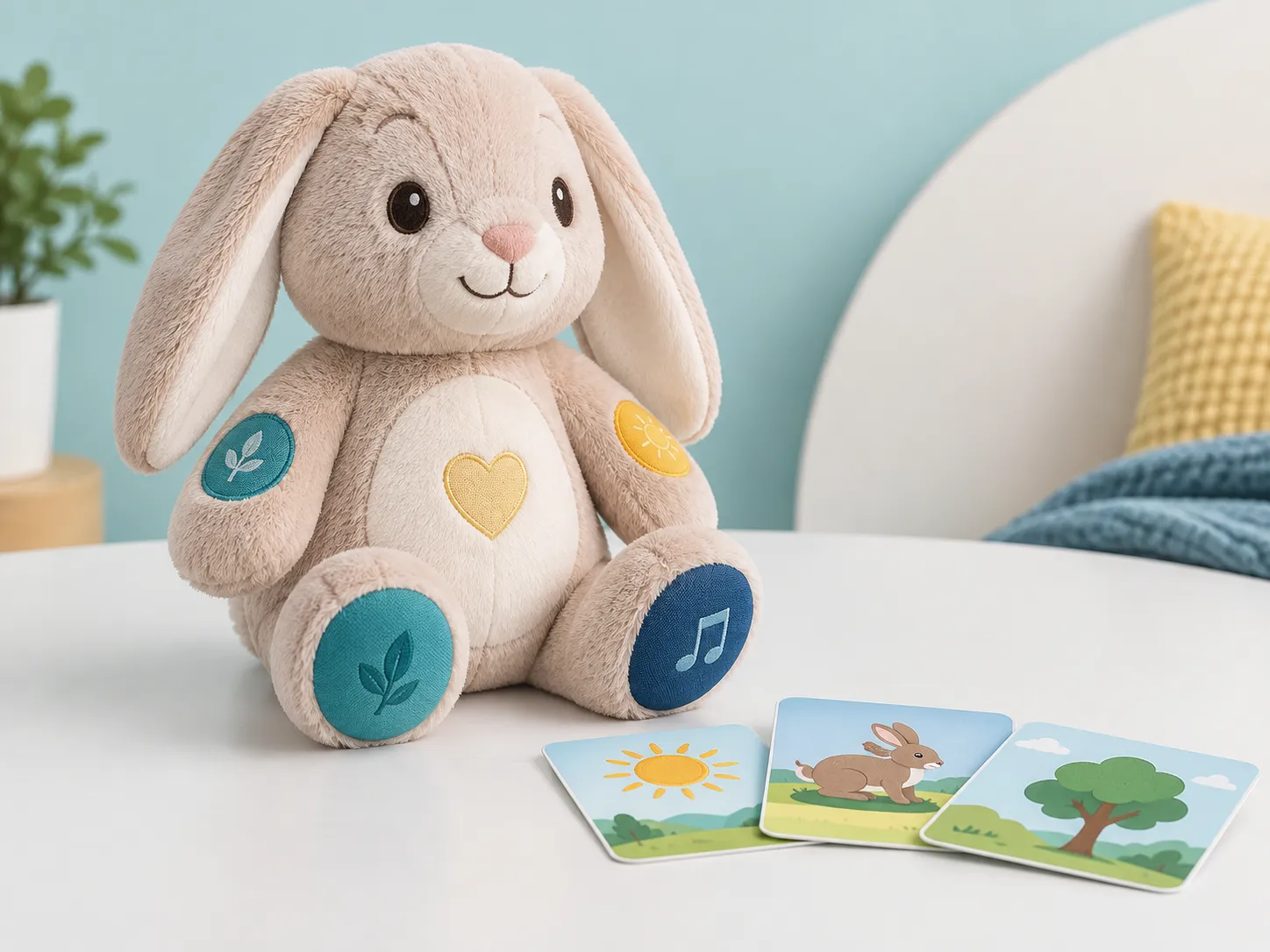
The product application should be specific enough to test. “Educational” is not a testable requirement. “When the child presses the embroidered music icon, the toy plays the selected 60-second song and allows the caregiver to lower volume with a concealed control” is much closer to an engineering and inspection requirement.
2. Build a useful talking plush requirement brief
The first supplier discussion should establish what is confirmed, what is a preference, and what still needs feasibility review. A visual reference alone cannot define scale, interaction, construction, audio, safety, or packaging. A short structured brief produces more comparable quotations and helps the supplier identify missing decisions before sampling.
Character and appearance inputs
Provide front, side, and back views where possible. Include target height, sitting or standing pose, color references, facial details, embroidery or print artwork, clothing, removable accessories, and brand rules. If the character is licensed, clarify approval stages and any tolerances the licensor controls.
Two-dimensional artwork does not resolve every three-dimensional decision. The pattern maker may need to interpret head depth, limb angle, seam position, balance, and how the toy holds its pose. Record these decisions through annotated sample photographs and controlled patterns instead of relying on email descriptions alone.
User and market inputs
State the intended age, supervision assumption, destination countries, sales channel, expected play pattern, care expectations, and packaging type. These inputs influence component accessibility, seam construction, labeling, instructions, battery approach, and the compliance plan. Avoid choosing age grading only for marketing convenience; it should match the design and foreseeable use.
Commercial and schedule inputs
Share a realistic quantity range rather than asking for one price at an undefined volume. Identify the target sample date, approval stakeholders, launch date, packaging artwork timing, audio status, and shipping destination. Lead time should begin from a defined release point, not from an optimistic date before files and approvals are ready.
| Brief area | Buyer should provide | Supplier should clarify |
|---|---|---|
| Character | Views, dimensions, colors, artwork, brand rules | Pattern approach, construction limits, appearance tolerances |
| Interaction | Trigger locations, response flow, controls, user sequence | Sensor or switch options, placement, access, firmware behavior |
| Audio | Scripts, languages, representative files, rights status | Format, memory, loudness approach, naming, loading, revisions |
| Market | Country, age, channel, retailer requirements | Testing inputs, labels, instructions, documentation dependencies |
| Commercial | Quantity range, target cost context, timing, shipping plan | Tooling, sample scope, MOQ drivers, exclusions, approval gates |
3. Select the interaction, controls, and audio architecture
The best trigger is the one a child can discover and operate consistently in the real plush construction. Options may include press switches, touch sensors, motion, squeeze actions, removable controllers, or compatible accessories. Each option changes cost, placement, activation force, power use, firmware, testing, and the feel of the finished toy.
Map every trigger to an observable response
Create an interaction table showing trigger location, activation method, first response, repeat behavior, interruption rules, timeout, volume response, low-power behavior, and shutdown. If several areas can be triggered, define whether sounds overlap, queue, restart, or interrupt each other. This table becomes useful during firmware review and shipment inspection.
Consider the physical layer. A switch that works on a bench may feel different behind fabric, foam, lining, and filling. Trigger force can vary if the production filling density changes. The integrated sample must therefore be evaluated in the intended construction, not only as an exposed electronics module.
Design caregiver controls deliberately
Power, volume, charging, track selection, or language switching may need to be accessible to adults without becoming distracting or easily changed during play. Define whether controls are external, concealed under a flap, placed inside a removable module, or combined. Review the access method for usability, component security, and product-specific safety requirements.
Prepare audio for a physical speaker environment
Voice files that sound clear through headphones may not remain clear through a small speaker behind fabric. Use representative voices, music, and effects during sampling. Evaluate intelligibility, background noise, relative loudness between tracks, start and end trimming, clipping, and whether the speaker opening or fabric attenuates important frequencies.
Establish naming rules before approving a large audio library. Connect each file to its trigger and language, record duration, version, and approval status, and preserve source masters separately from production-ready files. Confirm that the buyer has the rights to use character dialogue, voices, songs, and sound effects.
Have artwork but not an electronics specification?
Send the character views, touch-point idea, representative audio, age group, market, and quantity range. We can help structure a feasibility review.
4. Engineer soft goods and electronics as one construction
Mechanical integration determines whether the product remains comfortable, repeatable, and serviceable. The electronics should not create unintended hard pressure points during normal handling. Component pockets, fastening, wiring routes, speaker direction, filling distribution, seam access, and removable-module design should be defined in the sample and pattern set.
Fabric, embroidery, and filling
Fabric choice affects color, hand feel, seam behavior, audio transmission, cleaning guidance, and appearance consistency. Embroidery density can stiffen a small area; printed features may respond differently to rubbing or care; long pile can obscure icons or seam lines. Use material references and an approved sample rather than relying on a generic fabric name.
Filling affects shape and switch response. An underfilled sample may look soft but fail to hold the approved proportion. An overfilled area may increase trigger force or place pressure on components. Production work instructions should identify critical filling and component-placement areas, with a reference sample available to the line and inspection team.
Speaker and module placement
The speaker needs a consistent acoustic path, while the module needs secure placement and suitable access for assembly or care. Buyers should listen from normal holding positions, not only with the toy placed on a table. Confirm that stitching, lining, filling, or clothing does not shift over the speaker area and change sound during production.
Power and battery decisions
Replaceable and rechargeable approaches have different implications for enclosure design, charging access, user instructions, logistics, and testing. Specify the exact configuration before evaluating compliance evidence. If a cable is included, include it in the pack-out and inspection plan. If the module is removable, define how users reinstall it correctly and securely.
Care and cleaning claims
Do not promise that a talking plush is machine washable because a conventional plush version was washable. Electronics, openings, removable modules, fabrics, printing, adhesives, embroidery, and accessories all affect care. Develop care instructions from the approved construction and a validated process, and make sure packaging and labels use consistent language.
5. Use samples to close different types of risk
One sample may not answer every question. A disciplined project defines the purpose of each sample and the decisions required before moving forward. This reduces the common problem of repeatedly changing shape, audio, electronics, and packaging in the same uncontrolled round.
- Shape or pattern sample: evaluate character proportion, pose, scale, seams, fabrics, face, embroidery, and balance. Temporary materials may be acceptable if deviations are documented.
- Functional sample: evaluate representative triggers, controls, audio, speaker direction, power, and firmware behavior in a meaningful physical construction.
- Integrated approval sample: combine approved or production-intent soft goods, electronics, audio, labels, accessories, and early packaging.
- Production confirmation: verify the released pattern, materials, colors, components, audio version, work instructions, and pack-out before or at the start of the main run.
Maintain an action list after every review. Record the sample identifier, requested change, owner, due date, status, and whether the change affects other areas. Moving a switch can affect pattern pieces, wiring, filling, embroidery, test methods, and packaging. Changes are not independent.
For licensed characters, build the licensor’s review time into the plan. Decide whether the licensor approves photographs, physical samples, color references, packaging, and audio separately. A late rejection can affect materials already ordered, so do not release production from an informal visual approval.
6. What should factory testing and shipment inspection cover?
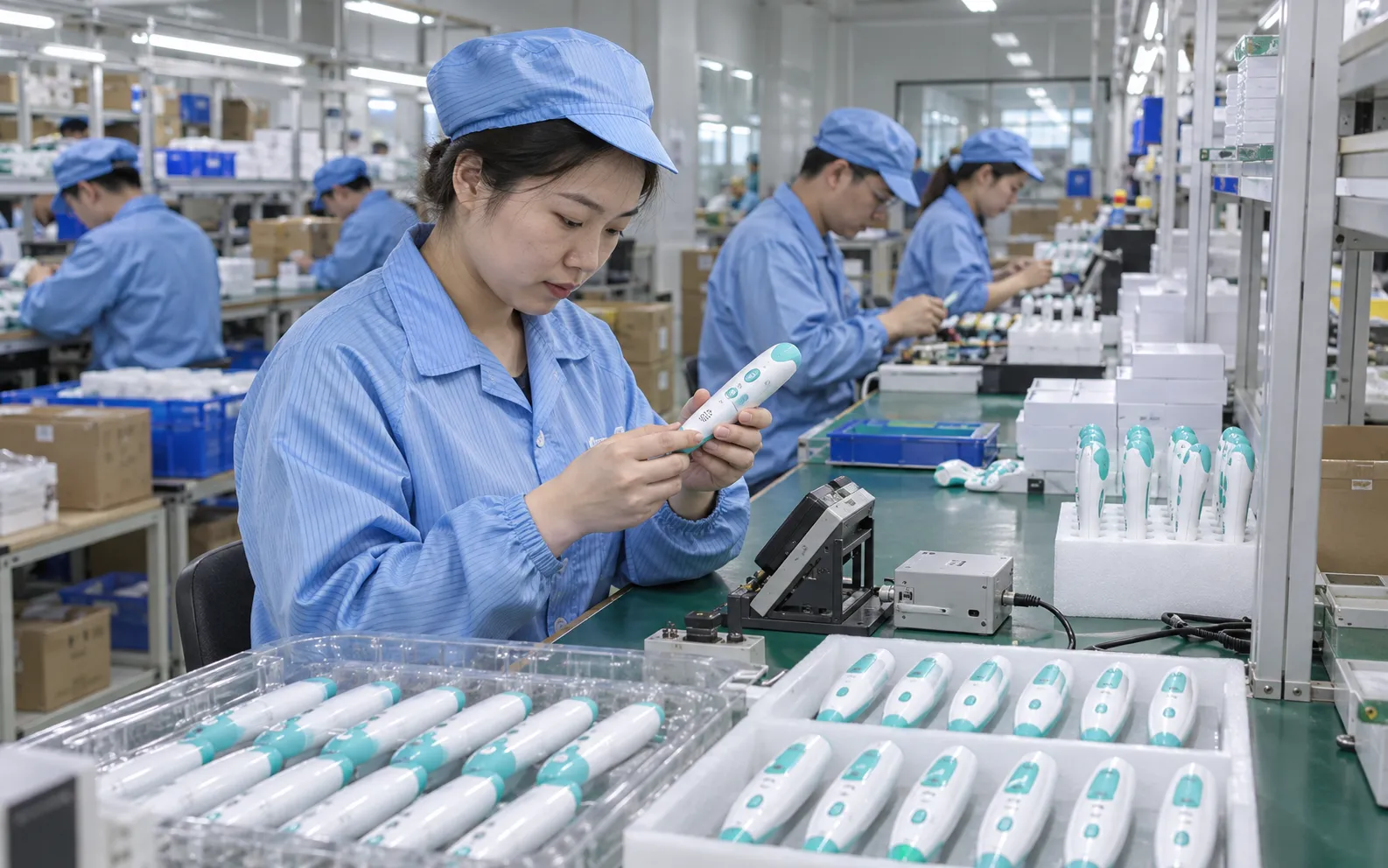
A talking plush quality plan should combine soft-toy workmanship with electronic function and content verification. The checks must use the approved sample, released patterns, material references, audio map, labels, and pack-out specification. Generic promises such as “100% checked” do not replace a project-specific test method.
Incoming and in-process controls
- Identify approved fabrics, embroidery threads, printed parts, accessories, electronics, speakers, switches, wiring, and packaging components.
- Control cutting, pattern orientation, embroidery placement, seam allowance, component pockets, wiring routes, and critical fastening.
- Use needle-control procedures appropriate to the manufacturing operation and record breakage response.
- Check representative modules before installation and protect approved audio and firmware files from uncontrolled replacement.
- Compare shape, filling, trigger feel, sound, and appearance with the approved production basis during the run.
Final functional and appearance checks
Confirm every defined trigger, correct audio response, control behavior, sound clarity, expected volume steps, power, indicators, and shutdown. Review seam security, loose threads, visible contamination, symmetry, facial placement, embroidery, accessories, label position, and component feel. The inspection method should explain whether every unit or a defined sample is checked for each characteristic.
Shipment inspection should occur when production and retail packaging are sufficiently complete to represent the order. Inspect random cartons, verify quantities and carton marks, and confirm the correct character, audio language, accessories, manual, labels, and packaging version. Include correction and reinspection time before the planned dispatch.
7. Plan toy safety and market compliance before final design
Requirements depend on product classification, age grading, materials, hard components, power source, sound, accessories, claims, and destination market. The buyer, importer, manufacturer, and laboratory should align the plan for the actual configuration. A report for a conventional plush toy does not automatically cover added electronics, and a report for a similar sound module does not automatically cover the final toy.
For the United States, start with the U.S. Consumer Product Safety Commission’s official toy safety business guidance. For the European Union, use the European Commission’s current toy safety portal. For electrical functions, the IEC describes the scope of IEC 62115 for electric toys. These are authoritative starting points, not a substitute for product-specific professional advice.
Potential review areas may include mechanical and physical hazards, small parts, seams, attachments, flammability, chemical restrictions, electrical functions, battery access, sound, labels, warnings, traceability, and required certificates or declarations. Retailers may also have supplier or social-compliance requirements that are separate from product-safety testing.
Freeze relevant materials and components after testing, and use change control. A substitute fabric, coating, battery, plastic enclosure, wire, speaker, accessory, or fastening method can affect the evidence basis. Ask the laboratory or compliance adviser whether a proposed change requires document review, limited testing, or broader reassessment.
8. How to compare talking plush manufacturers and quotations
Compare the complete scope: pattern development, sample rounds, fabrics, embroidery or printing, electronics, firmware, audio loading, tooling, labels, packaging, testing, inspection, and shipping terms. A lower unit price may exclude audio work, retail packaging, new patterns, or product-specific testing.
Questions to ask shortlisted suppliers
- Which parts of our design can use existing platforms, and which require new development or tooling?
- Who controls plush patterns, electronics integration, firmware, audio mapping, and final assembly?
- How will trigger performance be kept consistent when filling and fabric vary?
- What does each sample stage prove, and which temporary deviations should we expect?
- How are buyer files, character IP, patterns, tooling, and surplus branded materials controlled?
- Which incoming, in-process, functional, appearance, needle-control, and packaging records are available?
- Which reports apply to the exact product, and what additional testing is planned for our market?
- What is excluded from the quotation, and which buyer approvals can affect the schedule?
Experienced suppliers normally ask detailed questions in return. They should want to understand the character rights, target age, user flow, trigger positions, audio status, destination market, packaging, quantity, and approval process. A promise that “anything is possible” without these questions is not a substitute for feasibility analysis.
9. Frequently asked questions
What files are needed to make a custom talking plush toy?
A useful starting package includes character views, dimensions, color references, embroidery or print artwork, trigger locations, scripts or representative audio, target age, destination market, packaging concept, quantity range, and launch timing. Final production also requires controlled pattern, audio, label, and pack-out files.
Can a sound module be removable for washing?
A removable module may be possible, but the enclosure, access method, child resistance, user instructions, and intended cleaning process must be designed and evaluated together. Do not describe a product as washable until the approved construction and care method support that claim.
How many samples does a talking plush project need?
There is no universal number. Buyers commonly need separate decisions for shape and appearance, electronics and audio behavior, and the final integrated production basis. Complex characters, licensed approvals, new electronics, or new tooling may require more iterations.
How should buyers protect character IP?
Buyers should confirm that they own or are licensed to use the character, artwork, music, and voices; use clear confidentiality and manufacturing agreements; limit uncontrolled file sharing; and define how patterns, tooling, surplus materials, and rejected products are handled. Obtain legal advice for the jurisdictions and commercial relationships involved.
Conclusion: approve the complete talking plush system
A successful talking plush project preserves the character while making the interaction reliable and manufacturable. That requires coordination between pattern making, soft-goods production, electronics, audio, firmware, packaging, quality, and compliance planning. Treating any one of those areas as an afterthought creates avoidable rework.
Start with a clear character and user brief. Map every trigger to an observable response. Test real audio inside the intended construction. Use samples with defined approval purposes. Release controlled files and material references to production, then verify function, workmanship, content, labels, and pack-out during shipment inspection. The result is not just a plush toy that makes sound; it is a product system that can be repeated against an agreed standard.
Have a character and content concept but no manufacturing brief?
Share the character files, target size, interaction flow, audio scope, market, quantity range, packaging, and timing. We’ll help organize the next development questions.