Book and interaction brief
Define the reader, learning objective, page format, activation points, navigation, title library, and expected reading behavior before artwork conversion.
Coordinate OID-coded artwork, mapped audio, book identification, proof testing, print production, and a compatible talking pen as one publishing program.
Picture books, language titles, curriculum sets, reference books, and multi-title libraries
Editable artwork, OID layer, audio masters, mapping table, language versions, and release index
Book format, title count, hotspot plan, audio scope, printer, quantity, and launch schedule
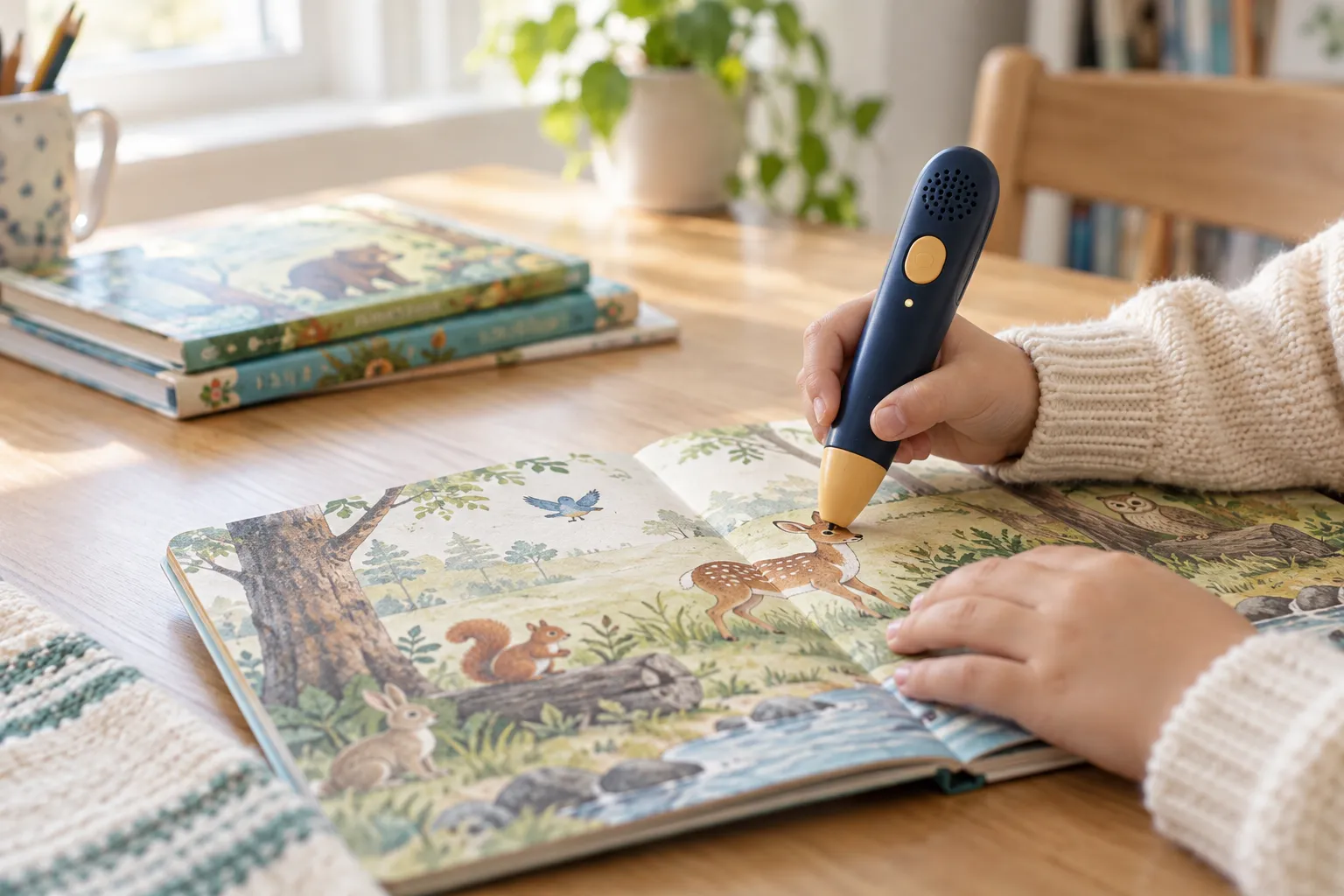
A talking pen book is a printed title prepared with compatible optical identification codes. When the reader touches a coded word, picture, icon, or activity with the pen, the device identifies that point and plays the assigned narration, pronunciation, instruction, music, or sound effect.
A reliable program treats the talking pen, book artwork, OID layer, audio library, mapping database, firmware behavior, printing method, packaging, and revision records as one controlled system. Publishers should approve representative printed pages with final-like audio before releasing the full title library.
Define the reader, learning objective, page format, activation points, navigation, title library, and expected reading behavior before artwork conversion.
Prepare the compatible code layer, hotspot IDs, page references, registration controls, print proofs, and printer handoff without obscuring the approved design.
Link each code to the correct approved track, language, book ID, and playback behavior using a controlled manifest that supports review and repeat orders.
Test recognition, audio identity, print alignment, page handling, pen controls, accessories, and packaging on a representative integrated sample.
Use this framework to make supplier discussions, quotations, samples, and approvals more comparable.
| Decision area | What the publisher should define | What should be verified |
|---|---|---|
| Book structure | Trim size, pages, binding, paper or board, print method | Page access, gutter reach, durability, and OID print compatibility |
| Interaction map | Words, images, icons, games, navigation, replay behavior | Hotspot size, spacing, accidental activation, and code identity |
| Audio library | Scripts, voices, languages, music rights, track duration | File names, mastering, mapping, pronunciation, and approvals |
| Pen pairing | Controls, memory, book selection, charging, accessories | Correct title recognition, playback, volume, and first-use flow |
| Production files | Released artwork, OID layer, audio package, version index | File consistency, proof sign-off, change control, and reprint traceability |
| Pack-out | Pen, books, cable, inserts, storage, retail packaging | Correct contents, language SKU, labels, protection, and carton identity |
Confirm titles, formats, languages, interaction density, audio scope, reader age, and commercial pack-out.
Create the OID artwork layer and connect controlled hotspot IDs with approved audio files and playback rules.
Test representative printed pages with the intended pen, firmware, audio, controls, and packaging assumptions.
Freeze the approved file package, verify production proofs, program the correct content, and inspect pen-to-book performance before shipment.
Share your market, books, functions, content status, quantity range, packaging, and timing. We’ll use them to organize the questions that need answers before sampling.
Send Your RequirementsThese answers provide a planning basis. Final scope should always be confirmed for the exact product and destination market.
Often yes. The editable artwork, page structure, intended activation points, audio scope, printing method, binding, and available margins should be reviewed before preparing the OID layer and integrated proof.
Yes, when book identification, memory, audio structure, firmware, file naming, and compatibility rules are planned as one library. The exact title capacity depends on the selected platform and content package.
The code layer is designed to work with compatible printing while preserving the visual design as far as the selected process allows. Printed proofs should be tested because substrate, ink, registration, lamination, and printer settings can affect recognition.
Share representative book artwork, trim size, page count, title count, hotspot concept, scripts or audio, languages, quantity range, packaging idea, destination market, and launch timing.
Send your current requirements, even if some details are still open. A structured first review can identify the missing decisions before they delay sampling.