How it works
Press, touch, motion, or accessory triggers activate assigned voices, music, stories, or learning prompts through an internal sound module.
Soft character products that combine touch interaction, voice content, learning prompts, and a brandable play experience.
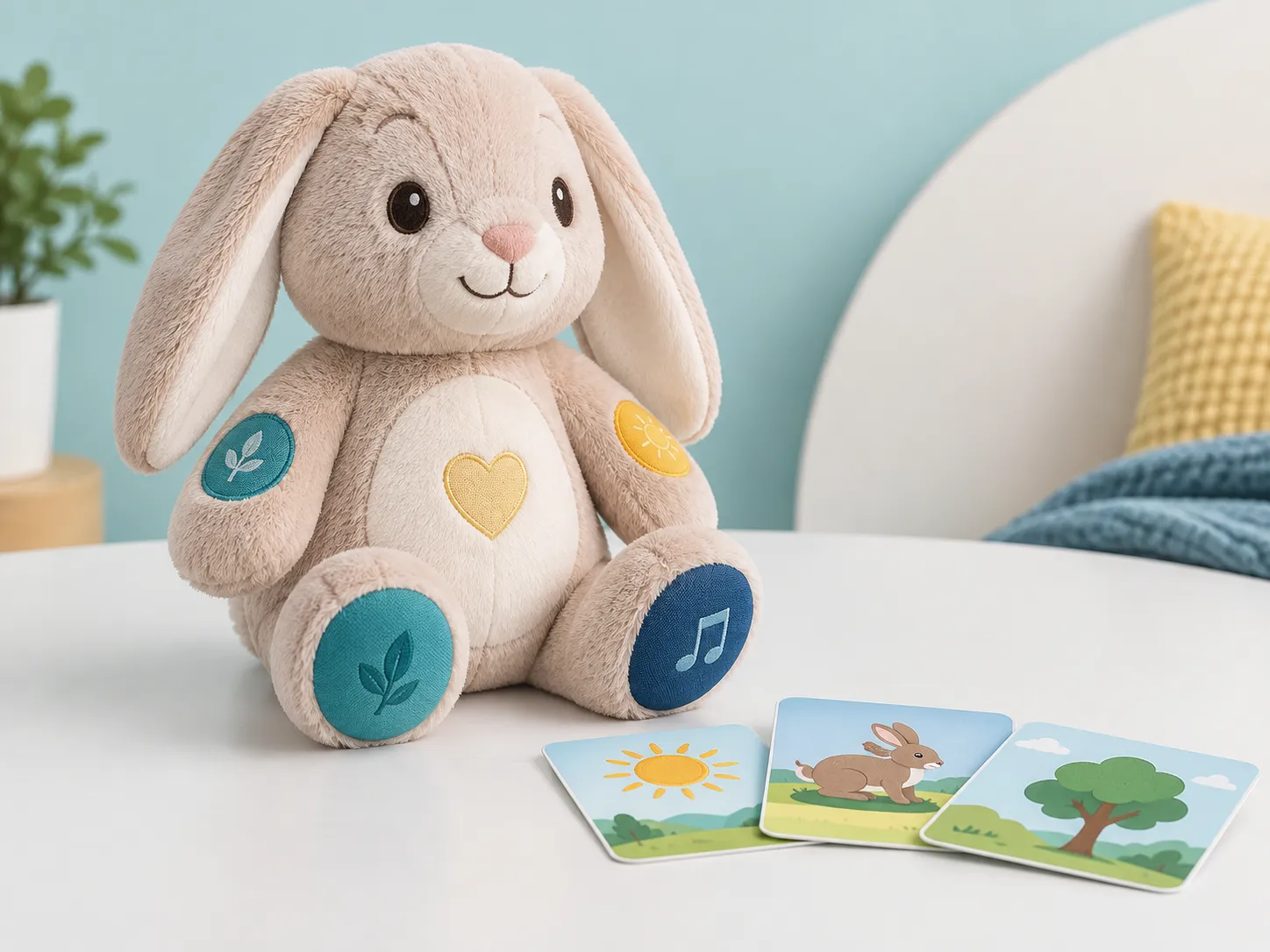
Character IP, early-learning brands, gift programs, and audio story concepts
Plush construction, trigger method, sound module, audio content, branding, and packaging
Age group, character files, interaction flow, audio scope, power plan, and quantity range
Product description
A talking plush project connects the soft toy, internal electronics, trigger method, voice content, power design, and cleaning guidance. Those choices should be reviewed together because each one affects play value, construction, testing, and cost.
We begin with the intended age group and interaction flow, then organize character appearance, audio structure, control access, packaging, and sample checkpoints around the buyer’s content and sales channel.
Press, touch, motion, or accessory triggers activate assigned voices, music, stories, or learning prompts through an internal sound module.
Character storytelling, bedtime audio, emotional learning, vocabulary practice, branded gifts, and preschool activity programs.
Character artwork, target dimensions, fabric direction, trigger flow, scripts or audio, languages, age group, and packaging concept.
Review shape, proportions, fabric direction, embroidery, color references, seams, access points, and internal component placement.
Define where interaction happens, what each trigger does, how tracks progress, and which controls a child or caregiver can access.
Organize scripts, voice files, music rights, sound quality, language versions, file names, and approval ownership.
Coordinate retail presentation, instructions, battery or charging information, care guidance, labels, and shipping protection.
Use this framework to make supplier discussions, quotations, samples, and approvals more comparable.
| Decision area | What to define | Why it matters |
|---|---|---|
| Character | Artwork, dimensions, colors, facial details, licensed-brand rules | Controls appearance development and sample review |
| Interaction | Press, touch, motion, card or accessory triggers and response sequence | Shapes electronics, placement, and play pattern |
| Audio | Track count, duration, languages, volume behavior, file ownership | Guides content workflow and memory planning |
| Power | Replaceable or rechargeable approach, access, indicator behavior | Affects construction, user guidance, transport, and testing |
| Soft goods | Fabric, filling, stitching, embroidery, washable-area expectations | Influences feel, durability, appearance, and care instructions |
| Packaging | Display style, restraints, inserts, manuals, labels, carton protection | Supports retail presentation and safe logistics |
Clarify the user, character, triggers, audio flow, controls, and sales channel.
Review construction, component placement, access, sound output, and appearance together.
Test representative audio, trigger response, feel, workmanship, labeling, and early packaging.
Freeze approved character details, audio, electronics, labels, pack-out, and inspection criteria.
Share your market, books, functions, content status, quantity range, packaging, and timing. We’ll use them to organize the questions that need answers before sampling.
Send Your RequirementsThese answers provide a planning basis. Final scope should always be confirmed for the exact product and destination market.
Yes, subject to feasibility and your right to use the character and audio. Provide controlled artwork, color references, scripts, audio files, and brand rules for review.
That depends on the play pattern, age group, construction, desired number of responses, power plan, and target cost. An integrated sample is important because touch feel and trigger response must be evaluated together.
Possible approaches depend on construction and the safety, access, and usability requirements of the project. The final method and care instructions should be confirmed during development.
Send your current requirements, even if some details are still open. A structured first review can identify the missing decisions before they delay sampling.