Phonics and vocabulary mapping
Link letters, sounds, words, pictures, and examples to controlled audio without overcrowding the page or creating ambiguous touch areas.
Build phonics, vocabulary, pronunciation, bilingual, and guided-listening activities around controlled scripts, mapped audio, printed books, and age-appropriate controls.
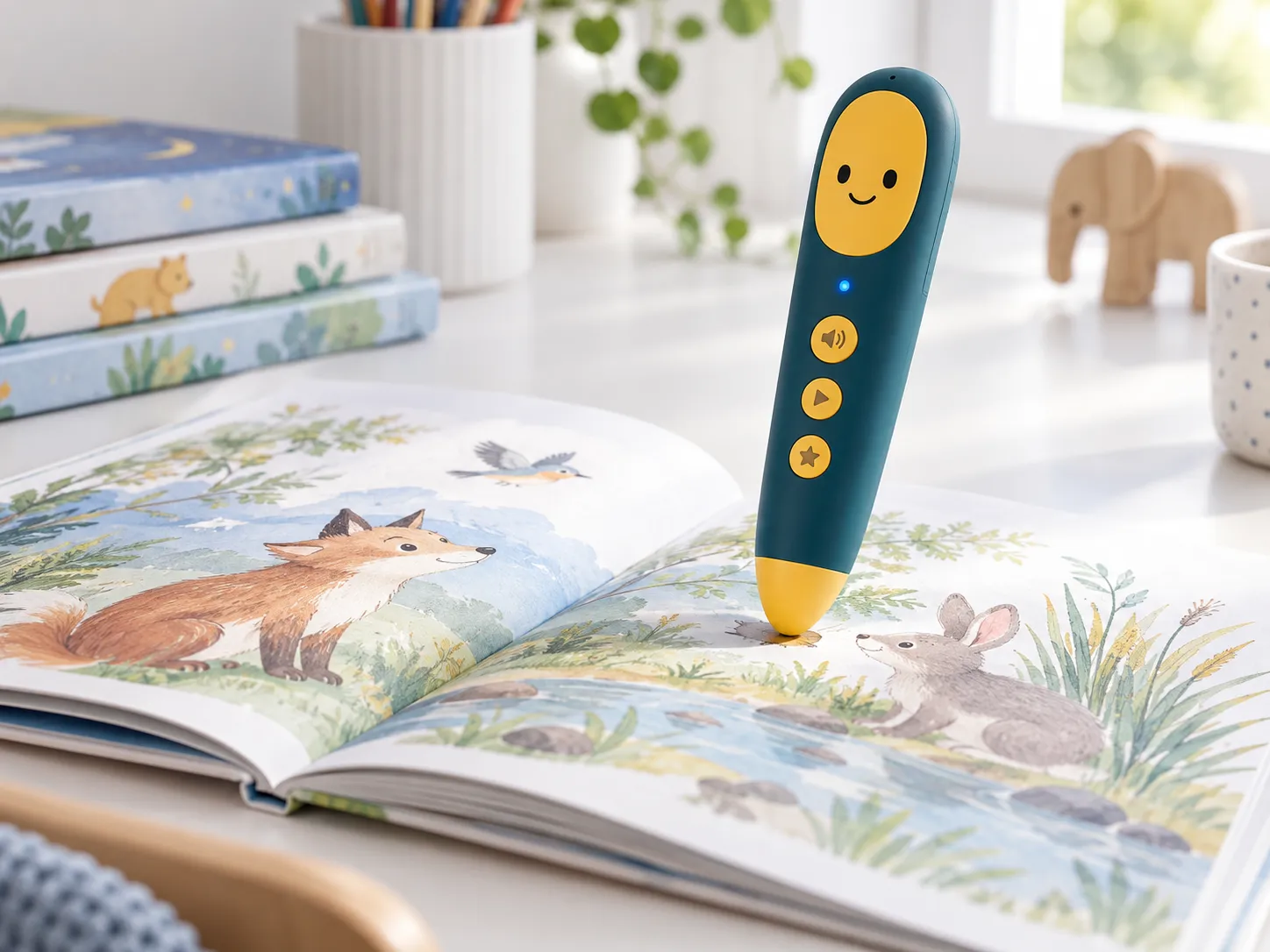
Phonics, first words, bilingual books, ESL activities, classroom sets, and home-learning programs
Curriculum, scripts, voices, languages, OID books, controls, audio behavior, and teacher or parent guidance
Learner age, language variety, lesson objective, reviewer, activity flow, title library, and market
An educational talking pen can connect a printed word, picture, sentence, or exercise with an approved pronunciation, translation, prompt, or response. The format is useful when learners need repeatable audio without navigating a phone or tablet during the activity.
The product should be built around a defined lesson flow rather than a list of electronic functions. Script control, native-language review, phonics conventions, bilingual switching, recording behavior, page mapping, speaker clarity, and child usability all need representative testing before production.
Link letters, sounds, words, pictures, and examples to controlled audio without overcrowding the page or creating ambiguous touch areas.
Define language selection, track naming, prompts, translations, dialect or variety, memory requirements, and how each edition is identified.
Use replay, learner recording, comparison, or guided-response functions only when the activity explains what the learner should do next.
Test representative books with approved reviewers and intended users for pronunciation, clarity, control discovery, grip, page access, and first-use instructions.
Use this framework to make supplier discussions, quotations, samples, and approvals more comparable.
| Learning decision | Buyer input | Production and review focus |
|---|---|---|
| Learner and objective | Age, proficiency, curriculum, home or classroom context | Prompt length, control complexity, page density, and support materials |
| Language standard | Language pair, regional variety, phonics convention, reviewer | Script consistency, pronunciation approval, retakes, and version identity |
| Activity flow | Listen, repeat, record, compare, answer, or switch language | Firmware behavior, buttons, feedback, audio order, and reset rules |
| Printed content | Book artwork, activation points, exercises, answer areas | OID mapping, gutter access, accidental touches, and coded proof testing |
| Audio masters | Voices, file format, track list, rights, mastering direction | Speech clarity, volume consistency, file IDs, and final approval |
| Program rollout | Title count, classroom quantity, replacements, updates | Compatibility, packaging, device identity, maintenance, and repeat orders |
Define what the learner touches, hears, says, records, answers, or repeats during a representative lesson.
Approve wording, language variety, pronunciation, voice direction, file names, and mapping references.
Use real book pages and final-like audio to review comprehension, recognition, controls, clarity, and lesson pacing.
Freeze the approved hardware, language package, OID files, labels, instructions, packaging, and inspection criteria by SKU.
Share your market, books, functions, content status, quantity range, packaging, and timing. We’ll use them to organize the questions that need answers before sampling.
Send Your RequirementsThese answers provide a planning basis. Final scope should always be confirmed for the exact product and destination market.
Not necessarily. A talking pen normally recognizes prepared coded areas and plays mapped educational audio. An OCR scan pen reads ordinary printed text. The coded system gives publishers tighter control over the exact audio and activity behavior.
Potentially. The language-selection method, audio volume, file structure, memory, prompts, book identity, packaging, and testing should be defined before sampling.
Recording and replay can be considered when the selected hardware and lesson flow support it. The interface should make the recording state, playback, deletion or overwrite behavior, and privacy expectations understandable.
The buyer should appoint qualified language reviewers and approve the scripts and final audio. Manufacturing review can control file identity, mapping, playback, and production consistency but should not replace linguistic approval.
Send your current requirements, even if some details are still open. A structured first review can identify the missing decisions before they delay sampling.