Point & Listen
Tap the page to hear mapped audio and prompts.
Develop talking pen hardware, OID talking pen books, mapped audio, multilingual content, packaging, and production around your publishing program. Additional interactive learning products are available for broader product lines.
OEM / ODM Audio Content Support Export-Ready Packaging
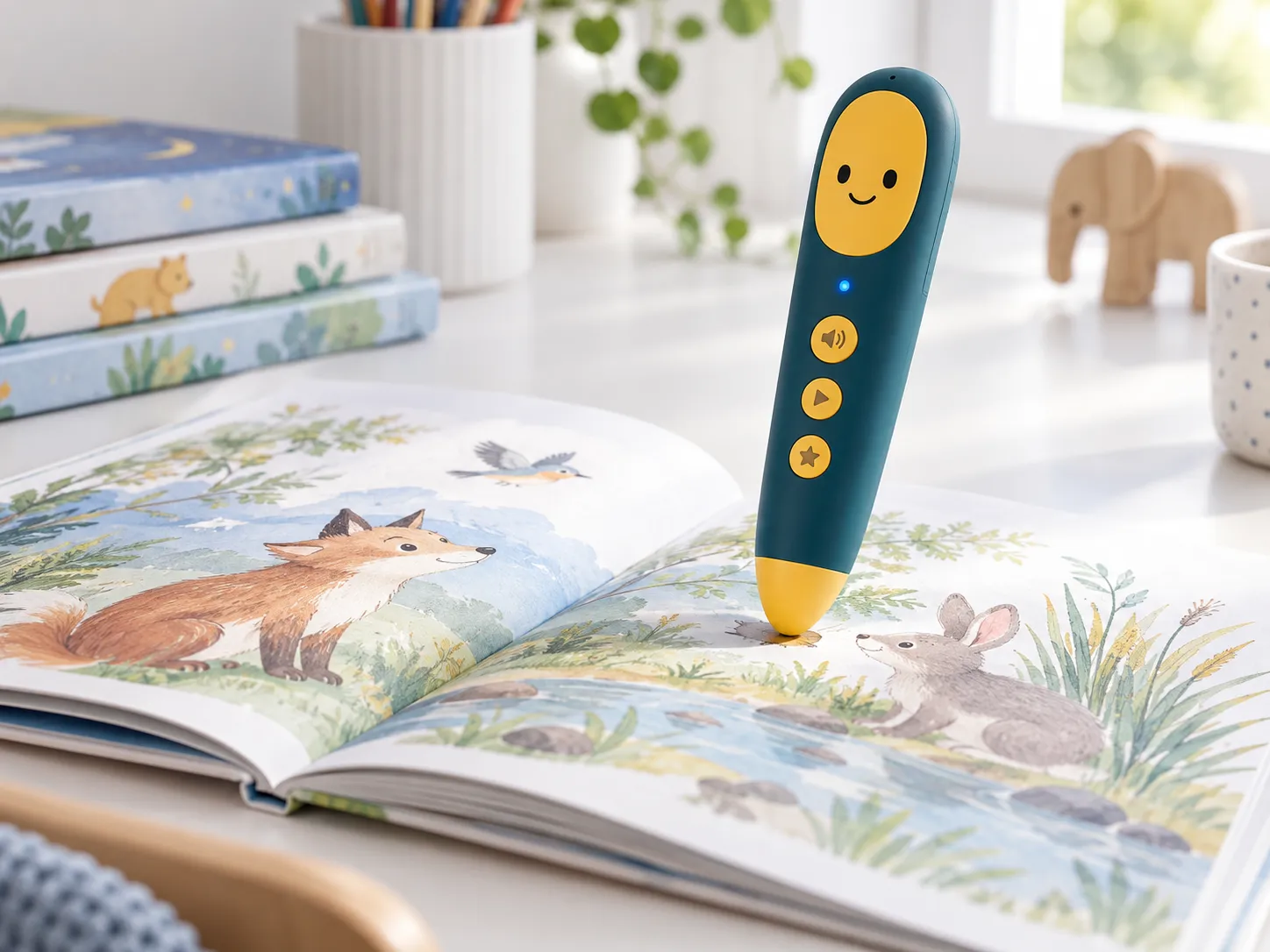
Start with the way children should listen, touch, respond, or solve—then match the product, content, controls, and packaging to the experience.
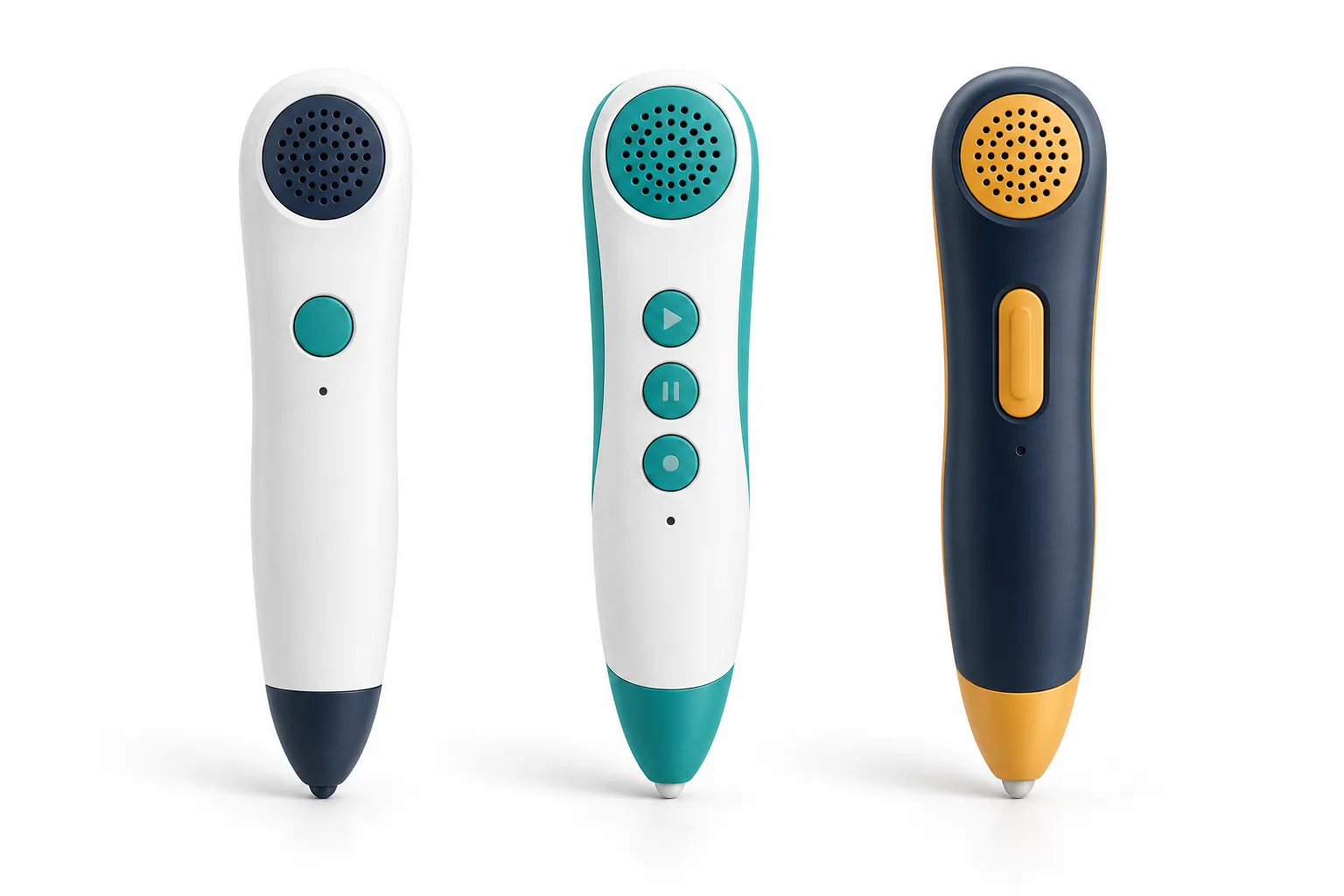
A custom reading pen manufacturer program coordinated with OID-coded books, mapped audio, learning controls, accessories, testing, and retail packaging.
Explore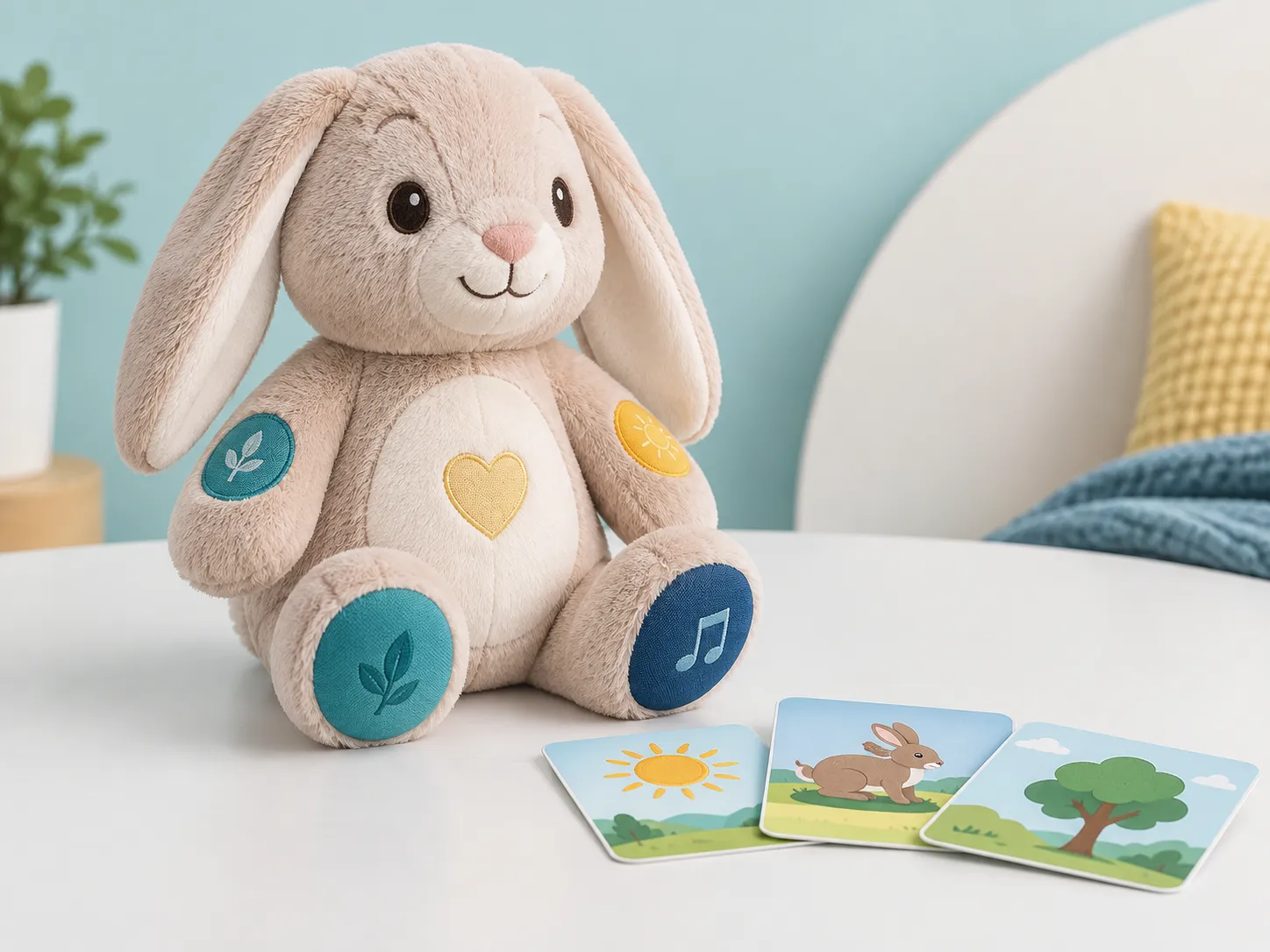
Interactive plush toy OEM programs that combine soft construction, custom voice content, sound modules, touch triggers, and private-label packaging.
Explore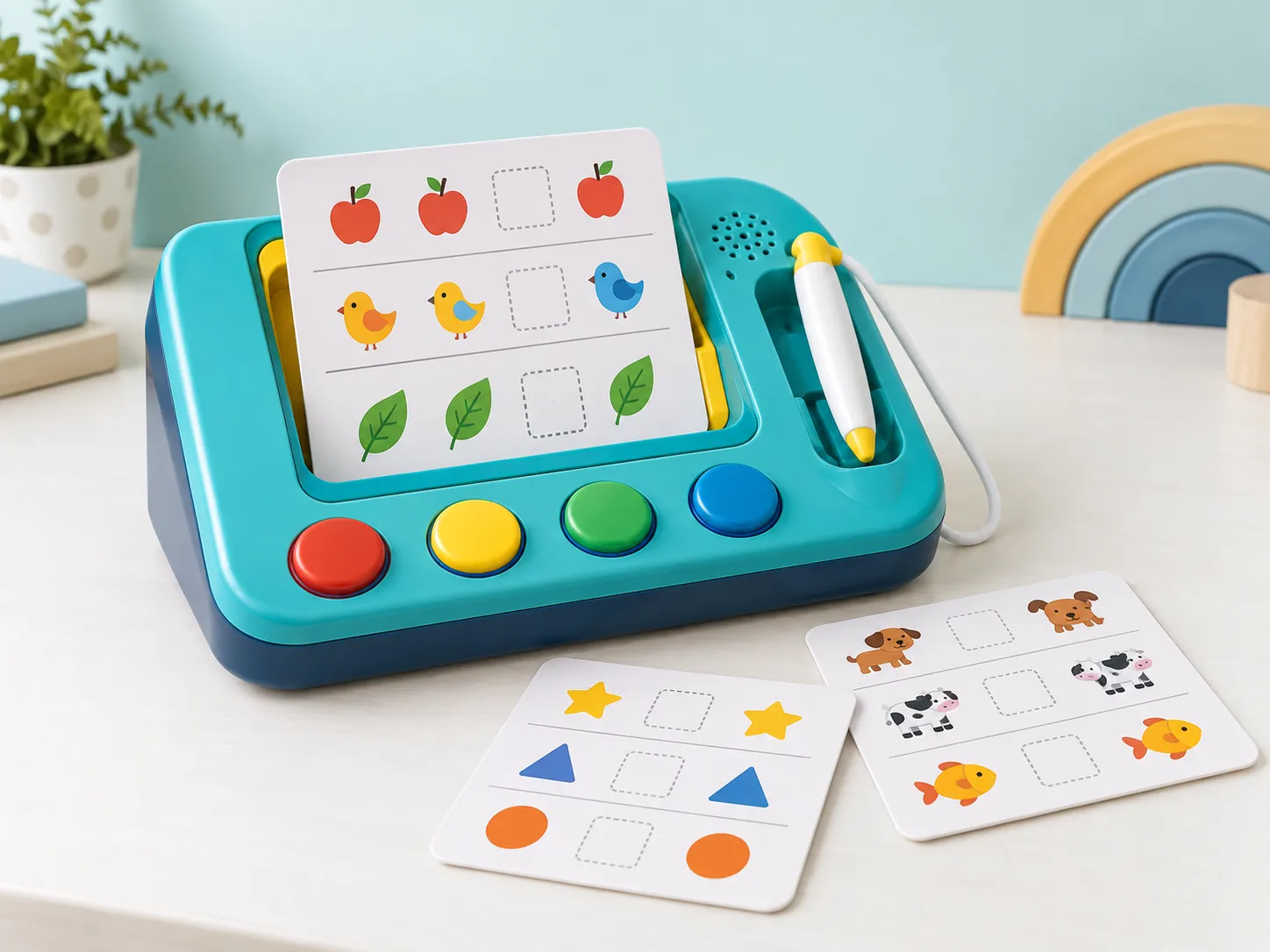
Screen-free logic learning devices planned around custom activity cards, audio feedback, matching tasks, number skills, and progressive challenge levels.
Explore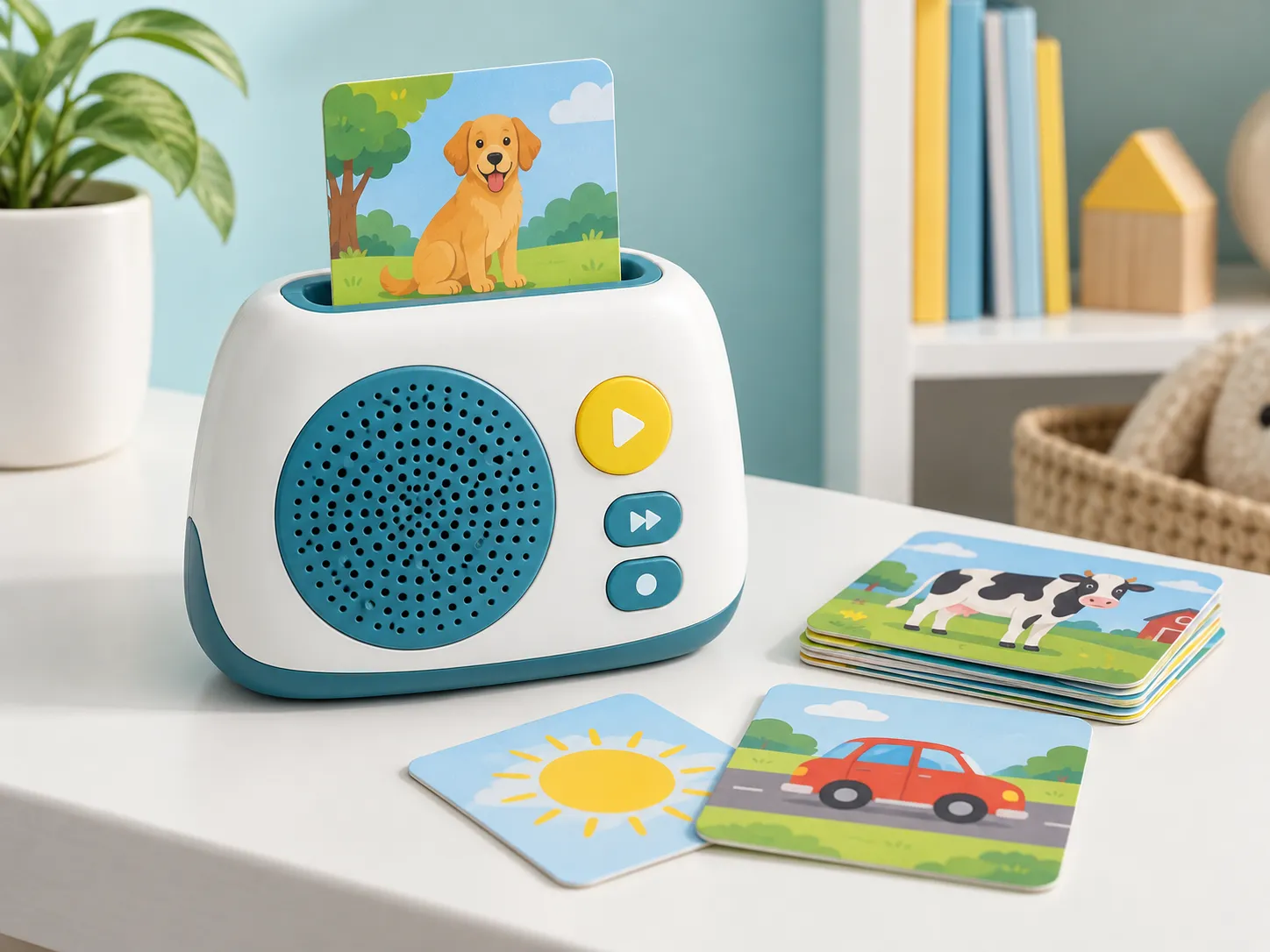
Custom screen-free audio players for kids that trigger stories, songs, vocabulary, or learning prompts when an identified card is inserted.
Explore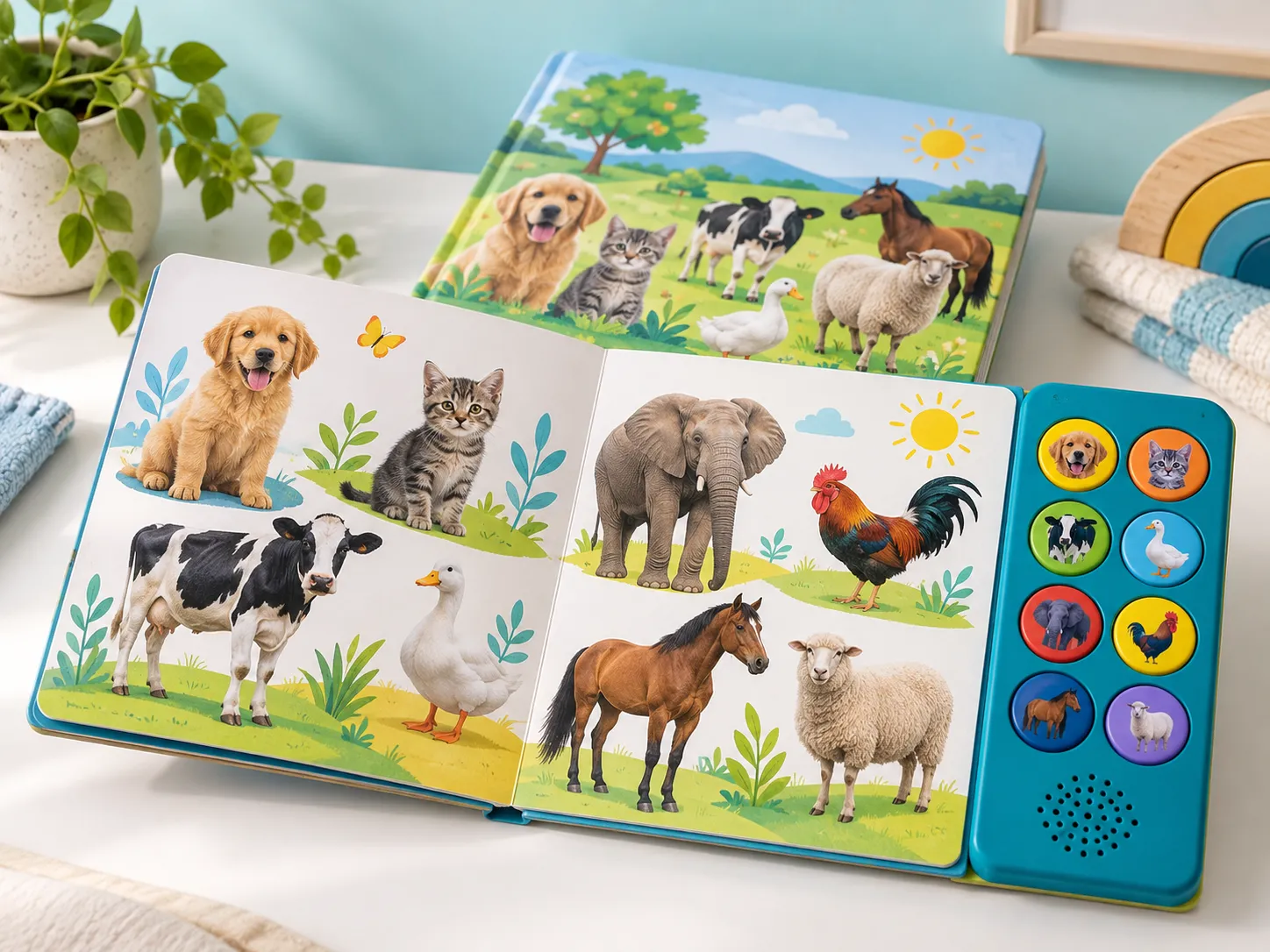
Interactive sound book OEM programs combining printed learning content with built-in audio modules, press buttons, binding, and retail packaging.
Explore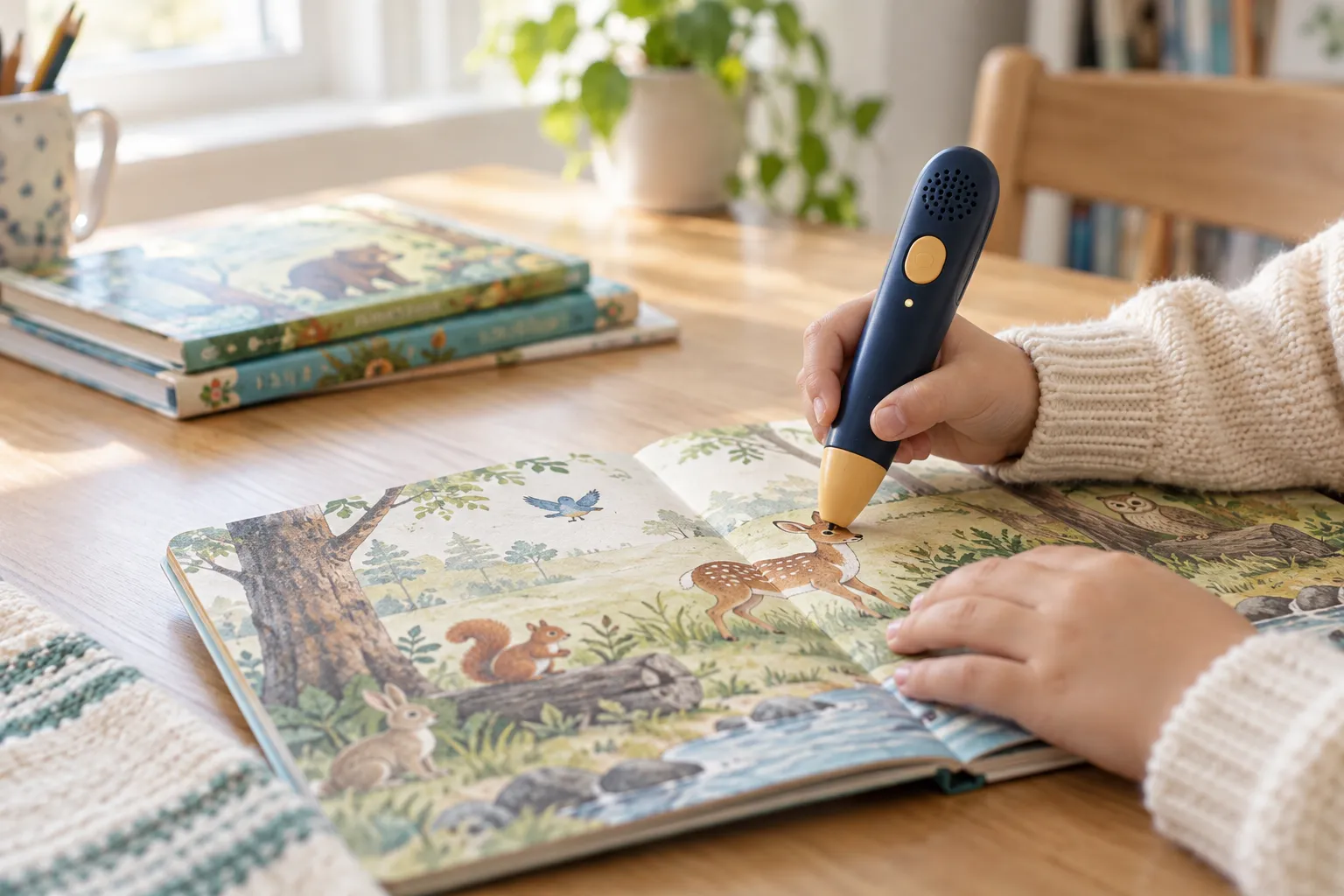
Tap the page to hear mapped audio and prompts.
Support practice with replay and optional recording.
Plan controls and output around the intended age group.
Organize content for your printed titles and learning sets.
The right specification depends on the books, audio library, languages, learning flow, intended reader, and way the program will be sold and supported.
Coordinate OID-coded artwork, audio mapping, book identification, printing, proofs, and multi-title compatibility.
Build phonics, vocabulary, pronunciation, bilingual switching, repeat, and optional recording into a controlled lesson flow.
Connect publisher-approved text and recitation with controlled verse mapping, language editions, print proofs, and SKU-specific production.
Commercial specification · Reviewed November 19, 2026
A talking pen manufacturer should be evaluated as a product-system partner, not only as a hardware assembler. The quotable scope should connect the pen, OID-coded books, audio mapping, firmware behavior, accessories, packaging, factory testing, destination-market preparation, and shipment inspection to one approved configuration.
Quotable scope
Use these fields to separate confirmed requirements from selectable options, buyer-supplied files, and open questions.
| Decision area | Information to confirm |
|---|---|
| Product system | Pen hardware, coded print, mapped audio, firmware, accessories, labels, packaging |
| User and market | Target age, learning setting, destination countries, sales channel, product claims |
| Content library | Languages, titles, audio duration, interaction map, version and rights ownership |
| Controls and power | Buttons, volume, repeat or record, charging or battery plan, indicators |
| Approval basis | Representative content, integrated sample, revision register, approved pack-out |
| Shipment release | Functional checks, appearance limits, correct content, accessories, cartons, records |
Customization range
Select a suitable reader, memory, controls, power architecture, housing, and accessories before discussing cosmetic changes.
Coordinate OID artwork, touch points, scripts, audio masters, filenames, mappings, print proofs, and future titles.
Review housing color, logo method, manuals, labels, tray, retail box, and export carton as one pack-out.
Define sample stages, file ownership, approval authority, testing responsibilities, inspection method, and change control.
MOQ planning
No universal MOQ is stated: the final quantity must be confirmed after configuration, SKU split, materials, and packaging are known.
Lead-time planning
A dependable schedule starts from an agreed release point and shows approvals, materials, testing, inspection, and shipment separately.
Product, test & pack-out evidence
Representative editorial images illustrate the review points. Current, date-stamped, model-specific production evidence should be requested for an active order.
Compare platform, controls, housing, finish, and accessory options against the intended use.
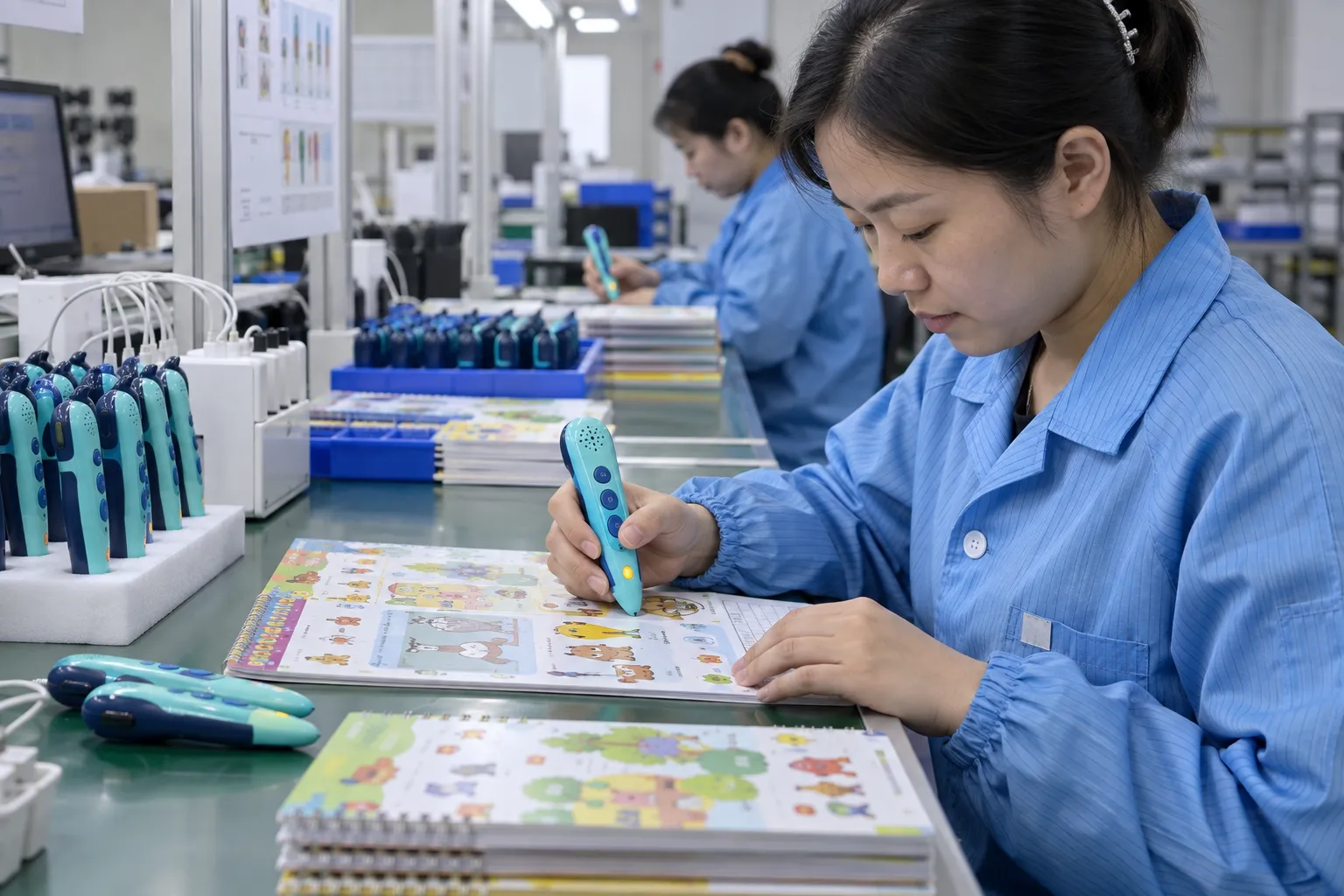
Recognition, audio, controls, and power behavior require repeatable checks.
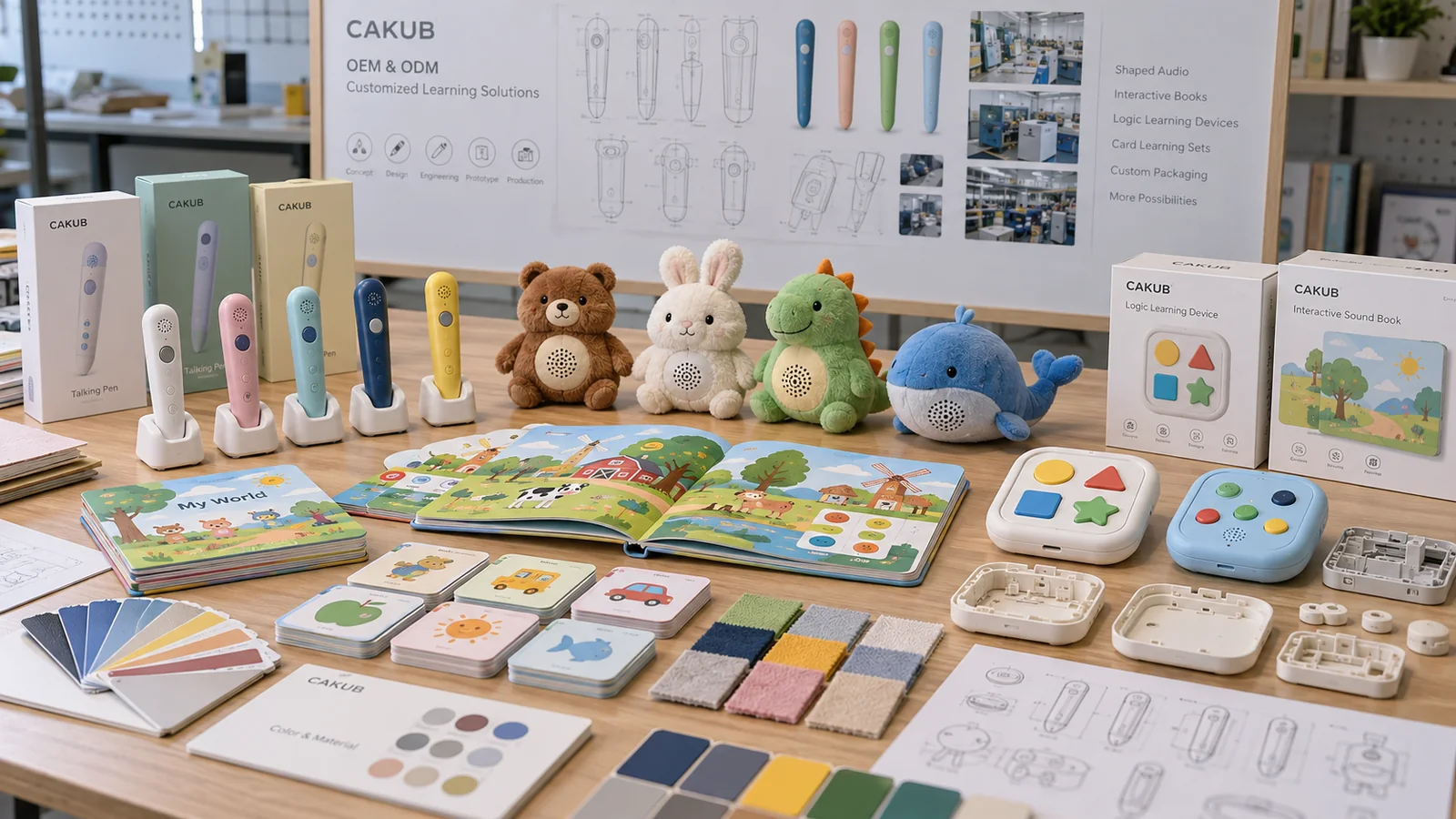
Treat the retail pack, inserts, accessories, labels, and cartons as part of the approved product.
Testing and inspection
Test representative points from different pages, titles, languages, and positions with the controlled pen and print files.
Verify track identity, clarity, volume steps, buttons, charging, low-power behavior, and firmware response.
Compare housing, finish, accessories, labels, instructions, retail pack, and carton contents with the approval set.
Confirm BOM, firmware, content maps, artwork, packaging, approved sample identity, lot records, and change approvals.
Related project scenario
The buyer has three launch titles, two languages, repeat and volume controls, a branded pen, and a retail starter set. Future titles must remain compatible.
Internal buyer resources
Next step
Share the target user, market, configuration, content status, quantity range, packaging, and timing. Unknown items can remain open for feasibility or sampling.
Each project moves through defined checkpoints for hardware, audio files, printed materials, packaging, and shipment preparation.
Align market, age group, book format, functions, packaging, and timeline.
Review handling, recognition, audio mapping, buttons, and early artwork files.
Confirm the agreed sample and production-ready files before the main run.
Track assembly, functional checks, appearance, accessories, and pack-out.
Verify cartons, labels, quantities, and shipment documents before dispatch.
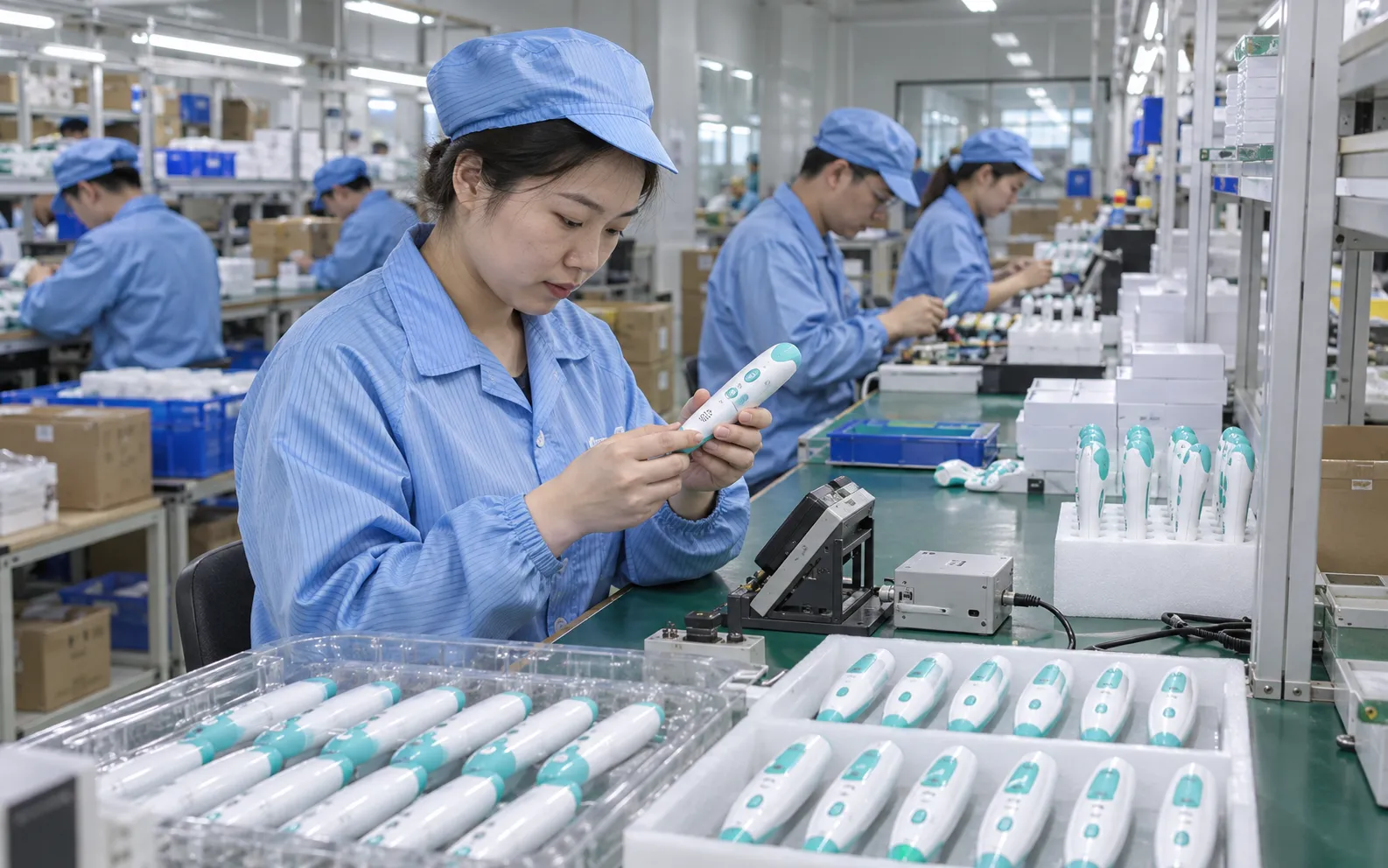
Function, appearance, accessories, packaging, and shipment preparation each need their own check—not a single last-minute pass.
Review our processProduction evidence
Assembly, functional testing, and pack-out checks make the production workflow easier for a buyer to evaluate.
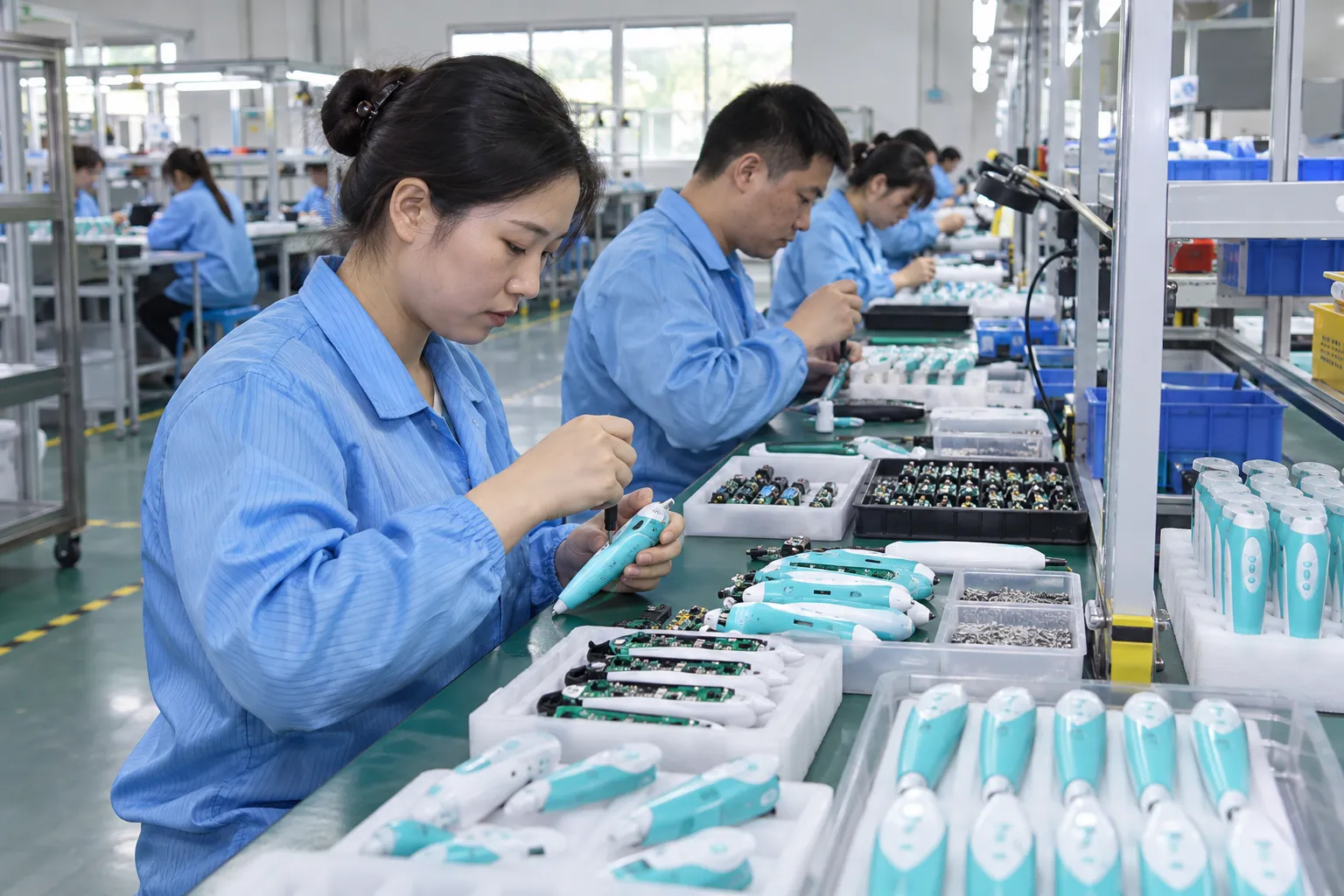
Demonstration photography shows the evidence a buyer should request. Replace it with current, date-stamped photos from the verified production site before launch.
Company spaces & operations
From the first visit to final shipment preparation, each space supports a practical part of the sourcing and development process.
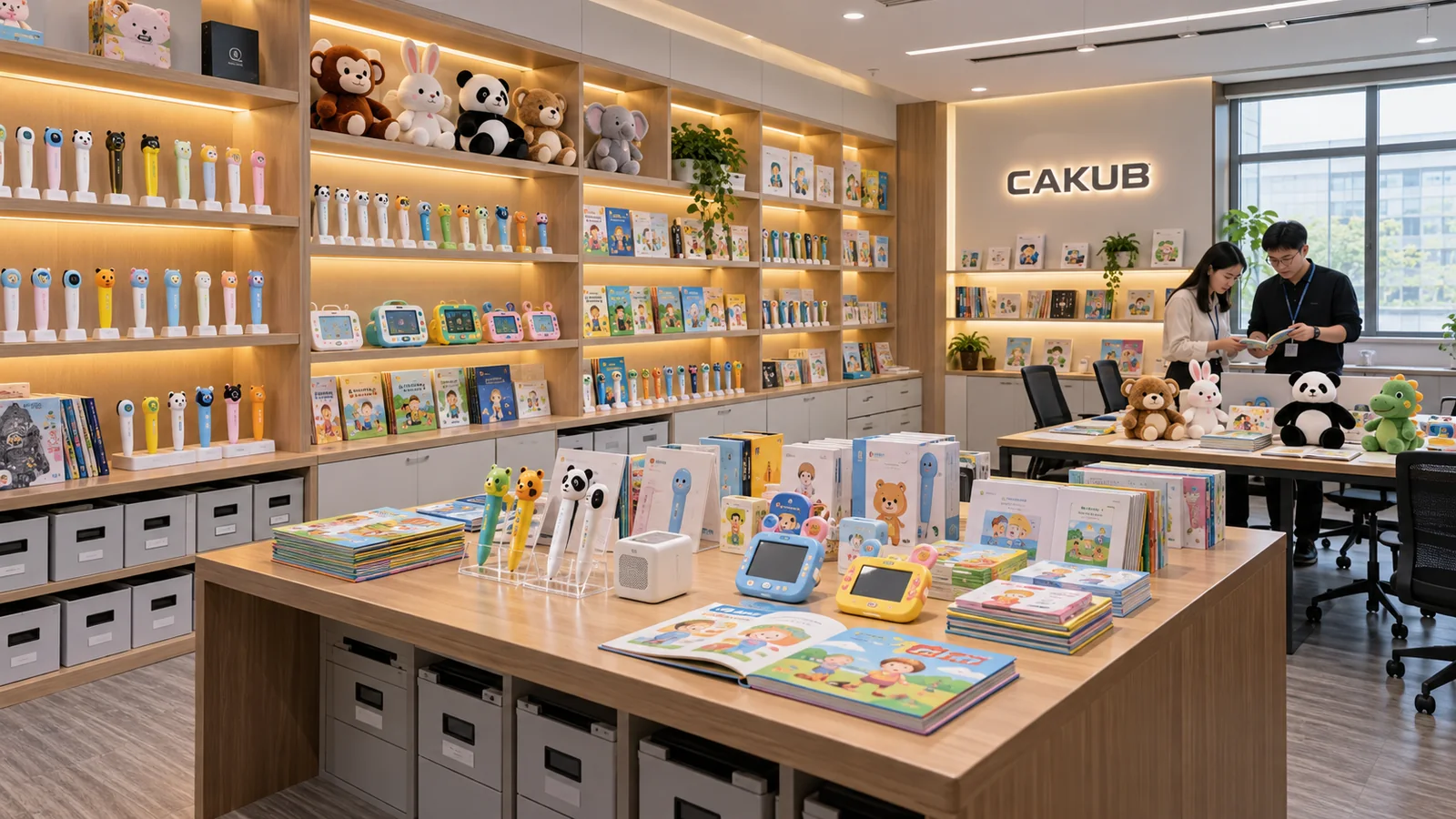



Representative imagery illustrates the environments and review moments discussed with buyers. Project-specific, date-stamped production evidence is supplied during sourcing and quality review.

Team & global collaboration
Product engineering, content preparation, sample review, quality control, and export coordination are connected through one project workflow.
Plan a product review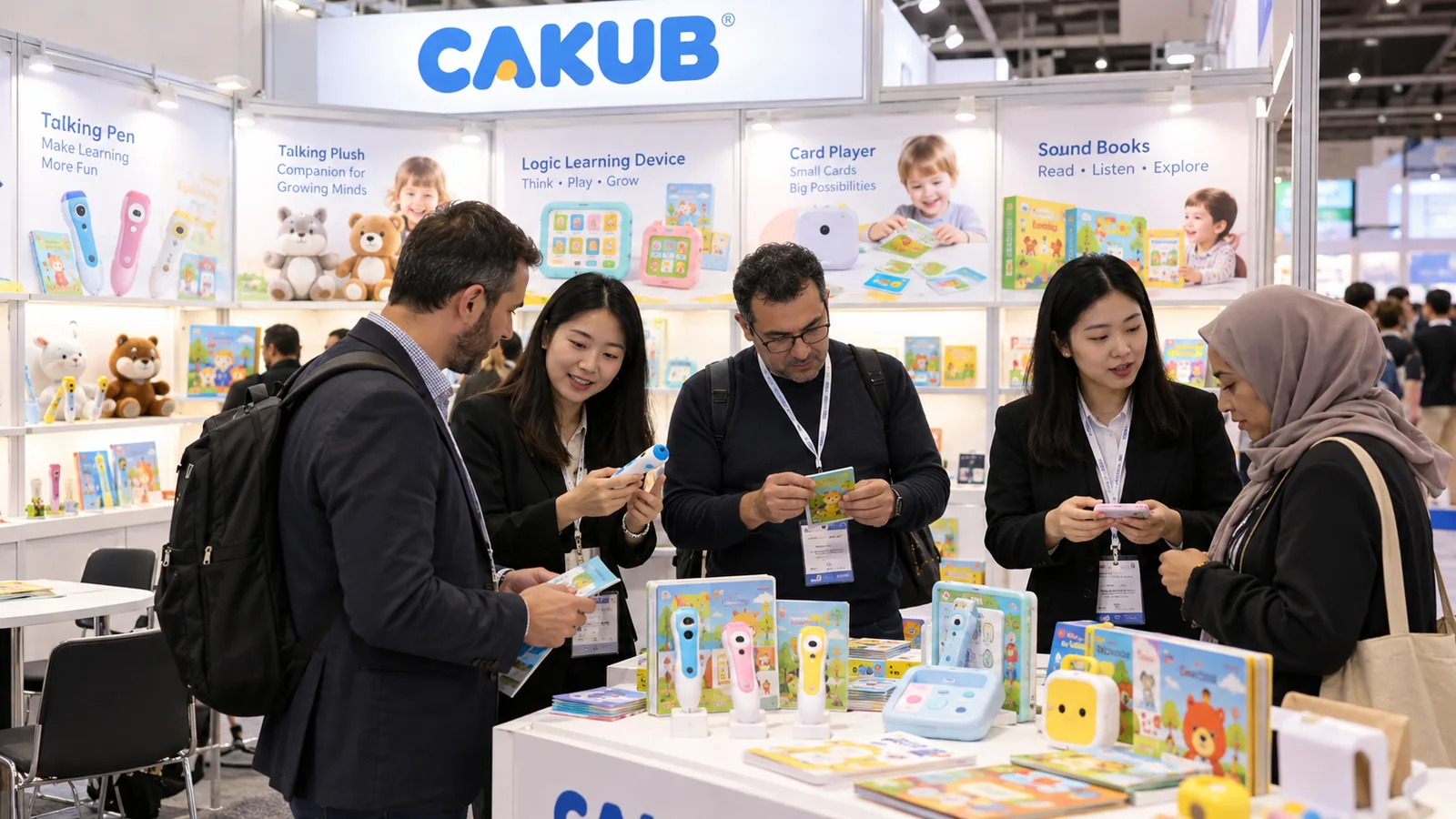
Compare formats, functions, target ages, and program fit with working samples in hand.
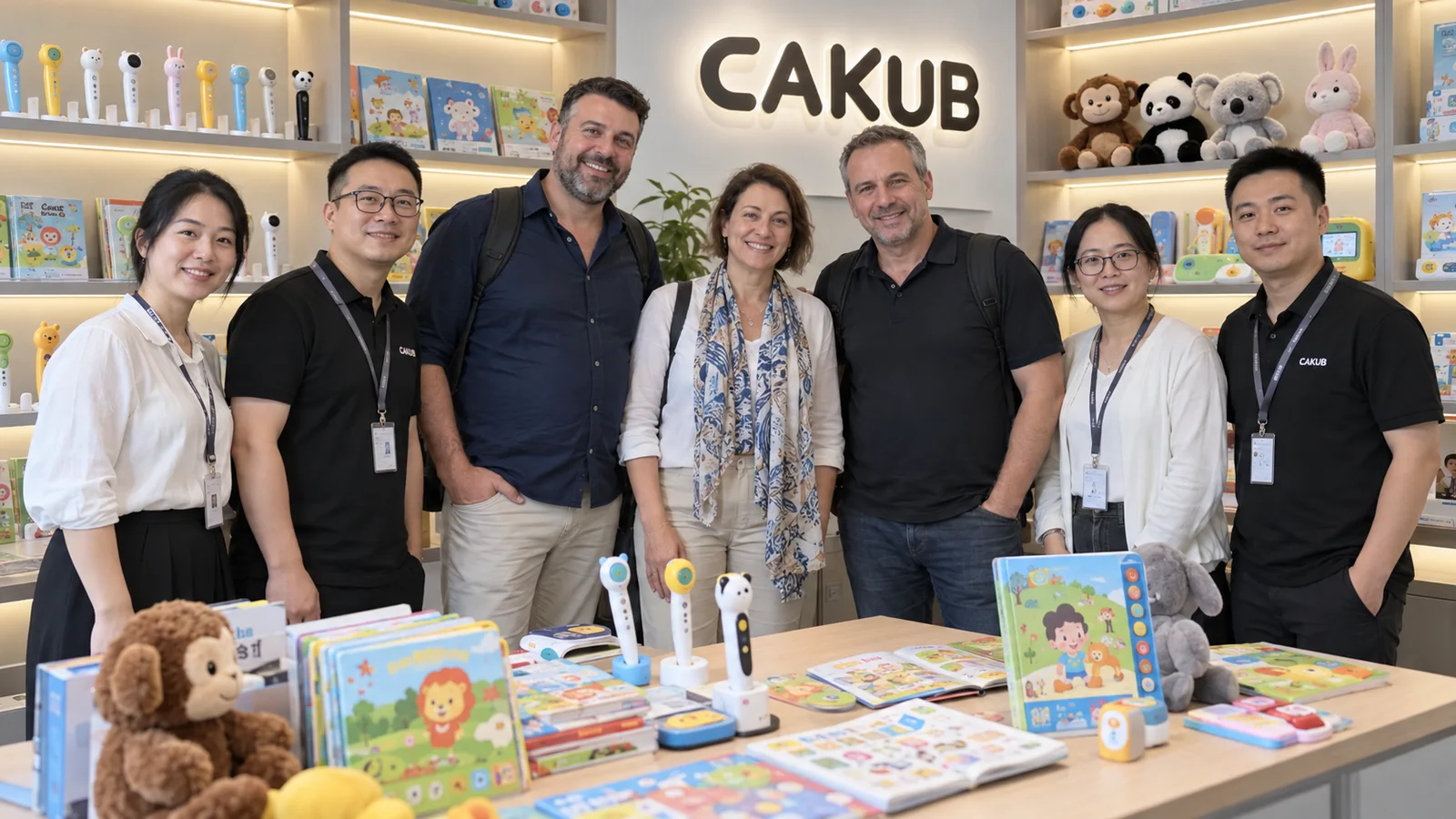
Use sample-room reviews to align the product direction before detailed development begins.
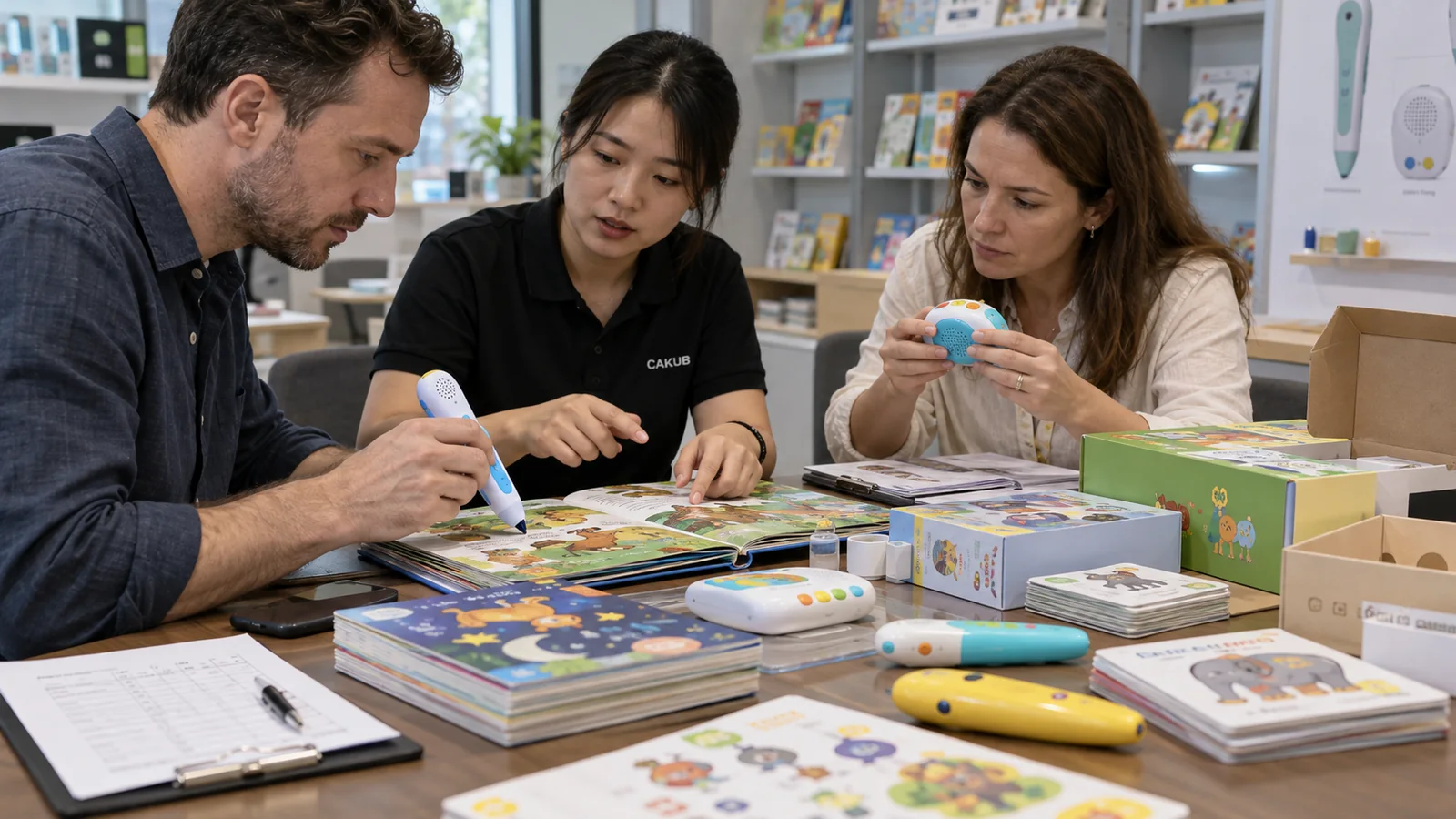
Recognition, audio response, controls, materials, and packaging can be evaluated against buyer requirements.
Bring your target market, content plan, product format, quantity range, and launch timing. We will help turn them into a clearer sample brief.
Send Your RequirementsRepresentative project formats
These formats show how buyer requirements can be organized. They are illustrative workflows, not claims about named customer projects.
Publisher book set
Multilingual learning program
Distributor-ready pack-out
Certificates & documentation
Compliance cannot be reduced to a row of logos. Buyers should confirm that each current file covers the final model, components, age grading, destination market, and valid report scope.
Request relevant documentsModel scope, age grading, electrical and applicable toy-safety evidence.
Battery specification, UN 38.3 and shipment documents where the selected configuration requires them.
Restricted-substance or material declarations aligned with the bill of materials and target market.
Approved sample, inspection criteria, production records, and shipment inspection evidence.
Only publish documents reviewed for the selected product and market. The labels above are document categories—not a claim that any unshown certificate is held.
A useful quotation begins with the target user, market, content library, functions, packaging, estimated quantity, and timing. That makes trade-offs visible before sampling starts.
Send Your RequirementsPractical content for evaluating suppliers, preparing files, and reducing avoidable project risk.
Procurement guide · 12 min read
Target keyword: talking pen manufacturer. Intent: commercial investigation. Built for buyers comparing technical fit, file workflow, quality controls, compliance planning, and shipment readiness.
Read the buyer’s guideClear answers at the start make sampling and quotation more useful.
Ask your own questionYes. A custom program can coordinate the pen hardware, printed dot-code files, audio mapping, packaging, and sample approval around your book project.
Share your target market, book format, required functions, estimated quantity, packaging expectations, and target launch date. This helps avoid a misleading one-size-fits-all quotation.
The workflow can include audio-file organization, naming and mapping checks, and coordination with compatible print files. Final scope should be confirmed against your content volume and publishing workflow.
Evaluate recognition consistency, audio clarity, button response, charging and battery design, housing durability, print-file control, packaging, and inspection records—not appearance alone.
Requirements depend on product classification, age grading, battery design, and destination market. Buyers should confirm the current test plan with an accredited laboratory and their importer or compliance advisor before production.
Share your target market, book format, functions, quantity range, and launch timing. We’ll help organize the next practical step.