How it works
Readers press integrated picture buttons to play narration, sounds, music, pronunciation, or learning prompts linked to the printed content.
Printed learning and story books with built-in sound modules, buttons, or page-linked audio experiences.
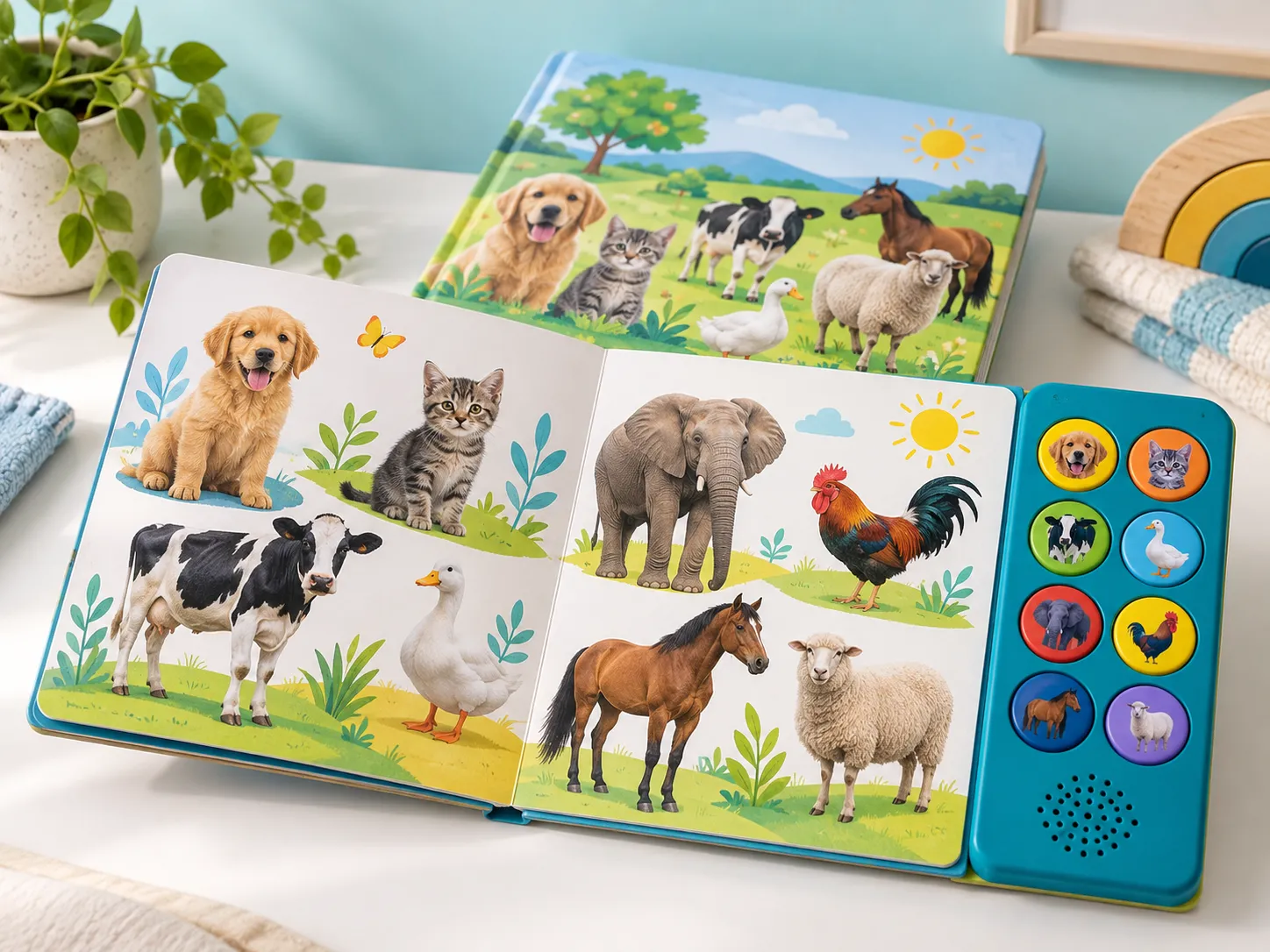
Children’s publishers, early-learning programs, museums, gifting, and retail book ranges
Book format, print artwork, sound module, button map, audio, binding, and packaging
Trim size, page count, button count, audio duration, age grade, print method, and quantity
Product description
A sound book is not simply a printed book with a sound module added at the end. Page layout, button position, icon clarity, audio length, speaker placement, board construction, binding, module assembly, and packaging all influence how the finished book feels and performs.
A coordinated workflow connects book artwork, scripts, recordings, button mapping, mechanical structure, sample review, print control, assembly, and final inspection before production release.
Readers press integrated picture buttons to play narration, sounds, music, pronunciation, or learning prompts linked to the printed content.
Animal sounds, first words, music books, language learning, bedtime stories, museum titles, and gift publishing.
Book size and page plan, artwork, button count, audio files, mapping, language, binding, age grade, and packaging.
Define size, page count, board thickness, binding direction, button panel, module location, and intended handling.
Link each visible icon or page prompt to the correct track, language version, volume behavior, and playback rule.
Prepare artwork around dielines, safe areas, color expectations, button positions, labels, and controlled revisions.
Plan module installation, speaker opening, battery access, function checks, book finish, retail wrap, and carton protection.
Use this framework to make supplier discussions, quotations, samples, and approvals more comparable.
| Decision area | What to define | Why it matters |
|---|---|---|
| Book format | Trim size, page count, board or paper construction, binding | Controls structure, cost, handling, and module space |
| Sound interface | Button count, positions, icons, page references, replay behavior | Connects reader expectations with correct audio |
| Audio | Narration, effects, music, duration, languages, rights, mastering | Guides module capacity and approval workflow |
| Artwork | Dielines, bleed, safe areas, colors, labels, revision control | Reduces print and assembly mismatches |
| Power and access | Battery design, switch, volume, pull tab, replacement guidance | Affects safety planning, instructions, and inspection |
| Packaging | Wrap, tray, box, display, warning labels, carton protection | Protects print surfaces and the integrated module |
Confirm the reader, trim size, page plan, button panel, audio scope, and sales channel.
Coordinate scripts, tracks, icons, button positions, dielines, and revision ownership.
Review print, binding, button response, sound, handling, labels, and early pack-out together.
Release approved artwork, audio, mechanical files, pack-out, and inspection criteria.
Share your market, books, functions, content status, quantity range, packaging, and timing. We’ll use them to organize the questions that need answers before sampling.
Send Your RequirementsThese answers provide a planning basis. Final scope should always be confirmed for the exact product and destination market.
Often yes, but it must be reviewed against the sound-book structure, button panel, dielines, safe areas, binding, labels, and module placement.
The right count depends on page design, learning flow, user age, book size, module architecture, audio duration, and target price. Clear prompts are more important than maximizing the count.
The workflow can use buyer-supplied approved files or a separately defined content-production scope. Rights, languages, voice direction, file format, and approval responsibility must be explicit.
Send your current requirements, even if some details are still open. A structured first review can identify the missing decisions before they delay sampling.