Landed Cost for Electronic Learning Toys: A Buyer Worksheet: A useful landed-cost model includes more than factory unit price: add development allocation, market testing, pack dimensions, freight, insurance, import duty, taxes, brokerage, inland delivery, and an explicit assumption for defects or returns. The buyer should confirm the final configuration, target age, sales destination, responsible importer, and applicable rules before treating a supplier report or sample as release evidence. A practical decision file links normalized supplier quote, HS classification basis, origin, freight and insurance quote, duty/tax assumptions, and per-SKU volume model to the approved model and production lot.
One learning device may look cheaper on a supplier pro forma but have a bulky premium pack, lower carton density, or additional test and tooling costs. A generic certificate, an attractive preproduction sample, and a low unit price do not answer the same question. The procurement team needs to identify the legal or operational decision, obtain configuration-matched evidence, allocate responsibility, and set a gate before goods are committed to shipment.
This guide is for educational publishers, STEM learning brands, curriculum teams, toy companies, and sourcing managers. It connects product application, customer requirements, controlled content, factory testing, shipment inspection, packaging, and market documentation without treating one configuration as universal.
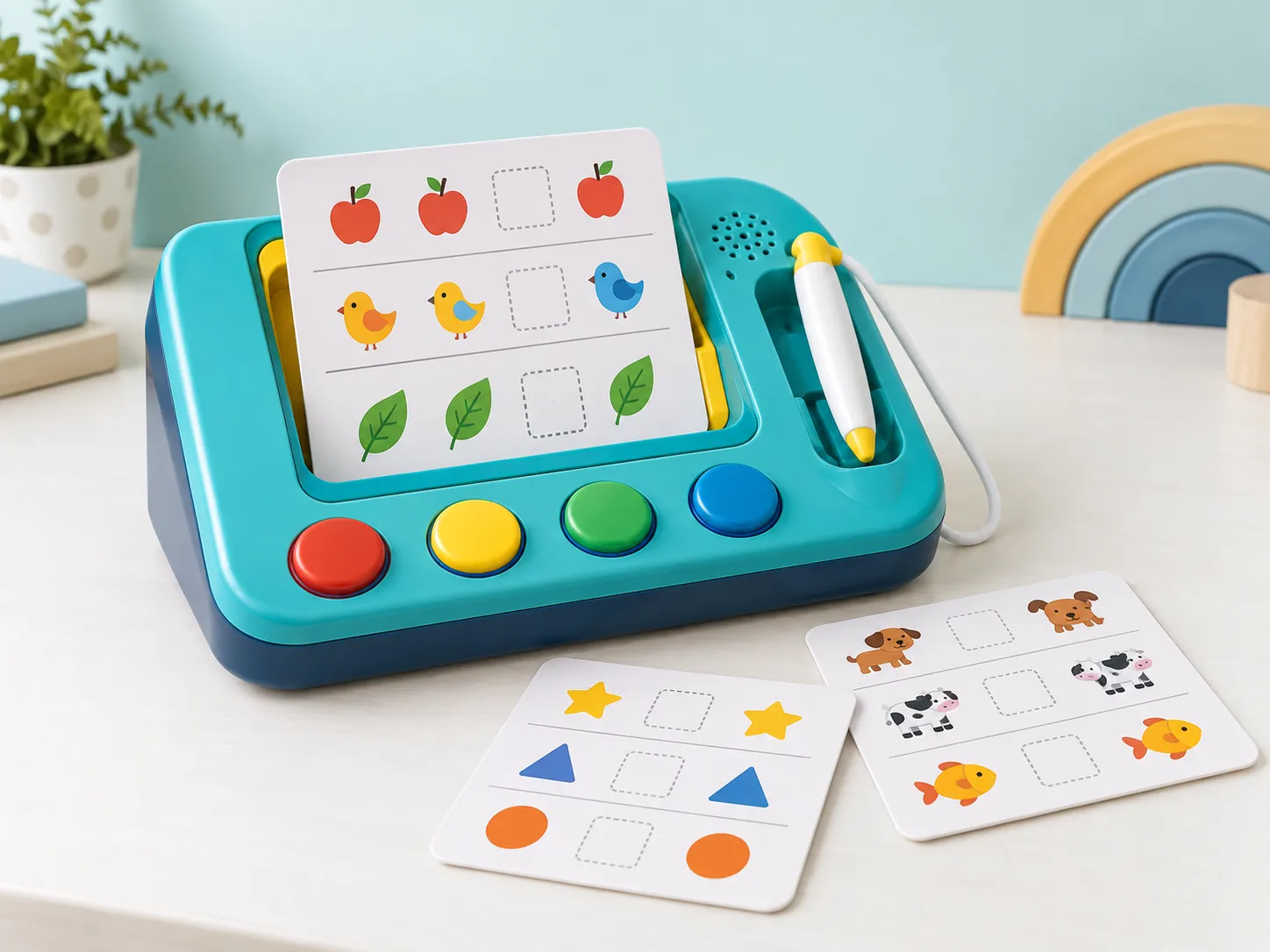
For an overview of the available configuration and customization direction, review Cakub’s logic-thinking learning devices product page. Buyers who are still comparing formats can also start with the interactive learning product range.
1. What should buyers understand first?
Landed cost is the buyer’s estimated cost to bring one saleable unit to the chosen destination under stated assumptions, not simply the supplier’s price. In this guide, electronic-toy landed cost is a controlled procurement workstream: the product specification, market scope, evidence package, named reviewer, sample or document check, and release decision must refer to the same SKU and revision. This is a buyer planning guide, not a substitute for an accredited laboratory, customs adviser, or legal interpretation.
Practical buyer answer: Build a model by SKU and order scenario. Keep one-time development charges separate from repeatable unit economics, and mark recoverable taxes separately from true costs where applicable. Start with one real saleable SKU rather than a product-family label. Record hardware, battery, firmware, printed or textile media, audio, accessories, age grade, claims, packaging, language, and importer identity. Then ask which change would invalidate normalized supplier quote, HS classification basis, origin, freight and insurance quote, duty/tax assumptions, and per-SKU volume model.
2. Where does this solution fit—and where does it not?
A budget is only comparable when the supplier configuration and transport basis are the same. The aim is not maximum paperwork; it is enough dependable evidence to support an accurate decision for the buyer’s final destination and channel.
| Decision question | Good fit when | Reconsider when |
|---|---|---|
| Does the scope match the saleable SKU? | Quotes use the same Incoterm, destination, set contents, packaging, and quantity split. | One offer excludes retail packaging and freight while another includes delivery and testing. |
| Can the buyer verify the evidence? | The file identifies normalized supplier quote, HS classification basis, origin, freight and insurance quote, duty/tax assumptions, and per-SKU volume model, issue date, model, configuration, responsible issuer, and any limitations. | The only support is an undated summary, supplier claim, or report for a different version. |
| Is the release gate realistic? | The owner can complete recalculate per-SKU landed scenarios and record which costs are estimates versus confirmed charges before stock is packed or booked. | Decisions wait until after goods depart, when correction becomes expensive and slow. |
3. Which specification decisions change the project?
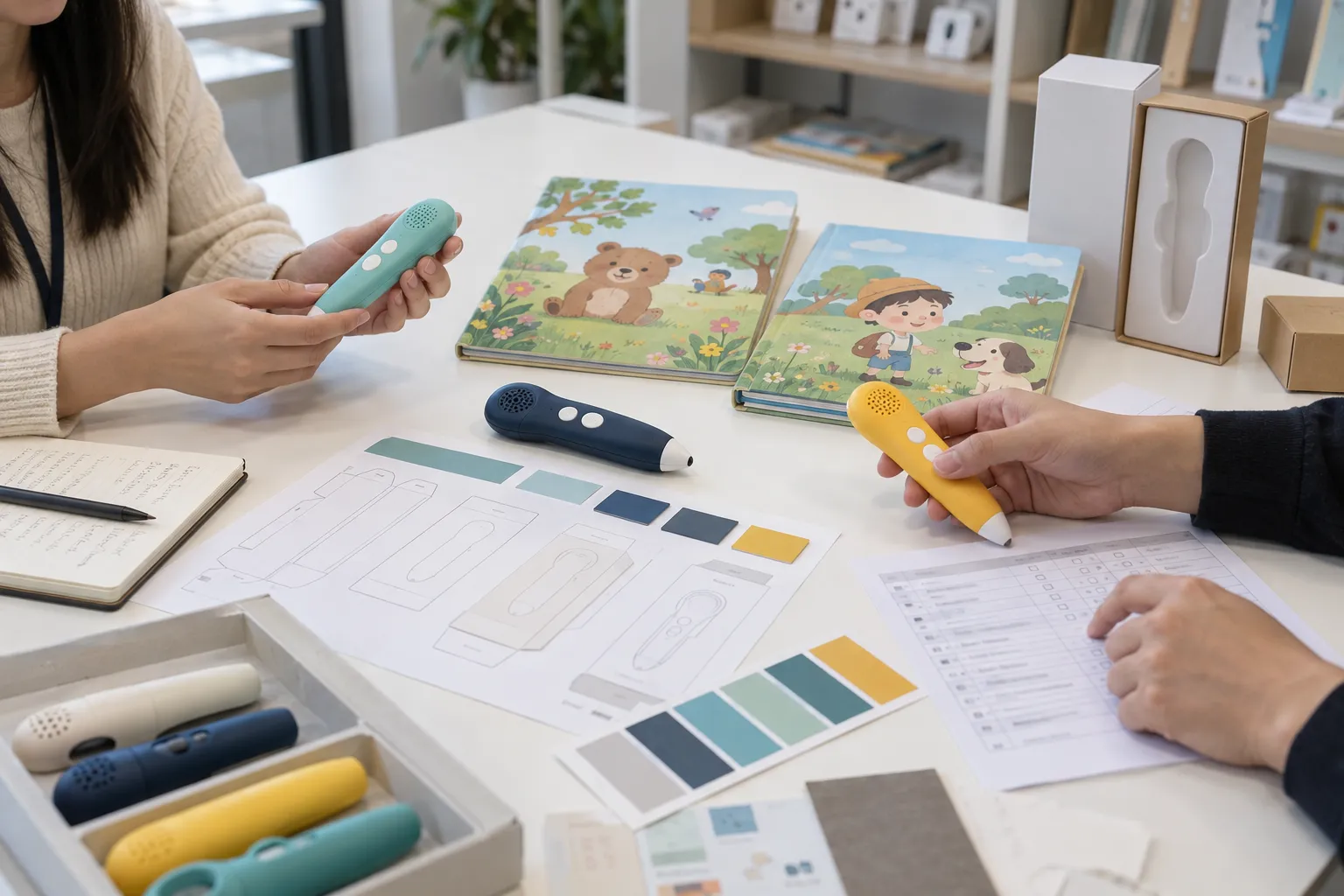
Landed cost should expose decision sensitivity, not produce an unjustified exact profit promise. These six decisions are the useful core of an import-ready specification; each should have an owner and a recorded answer.
1. Product and market boundary
Write down the exact electronic-toy landed cost scope for the buyer’s final destination and channel: intended user, age grade, sales channel, named importer, SKU variants, optional functions, battery type, accessories, and claims. Tariff classification, origin, trade measures, and tax treatment require current destination-specific advice. Record the decision, owner, approval reference, and verification method for the final logic-learning device configuration.
2. Applicable rule or trade basis
Use official tools such as EU Access2Markets and customs rulings where classification uncertainty materially affects the estimate. Do not assume a certificate for one country transfers to another; record the source, version or date checked, and the person who made the applicability decision. Record the decision, owner, approval reference, and verification method for the final logic-learning device configuration.
3. Configuration-matched evidence
Request normalized supplier quote, HS classification basis, origin, freight and insurance quote, duty/tax assumptions, and per-SKU volume model. Compare model identity, component list, drawings, firmware or content revision, sample description, test method, and label artwork with the sellable pack. Record the decision, owner, approval reference, and verification method for the final logic-learning device configuration.
4. Factory control point
At the production site, perform finished weight, carton dimensions, pack density, barcode, and SKU segregation. Separate a routine function check from independent compliance assessment; a line test cannot replace a required laboratory report. Record the decision, owner, approval reference, and verification method for the final logic-learning device configuration.
5. Shipment and document release
Before dispatch, complete recalculate per-SKU landed scenarios and record which costs are estimates versus confirmed charges. Record lot and carton identities, retained samples, open deviations, disposition, and who authorized release. Record the decision, owner, approval reference, and verification method for the final logic-learning device configuration.
6. Change and escalation rule
If carton dimensions, unit pack, classification, order split, exchange rate, or Incoterm changes, stop relying on the previous approval until impact is reviewed. Decide whether new sampling, testing, classification, labeling, or importer sign-off is needed and preserve the decision record. Record the decision, owner, approval reference, and verification method for the final logic-learning device configuration.
Model scenarios rather than false precision
For a launch, calculate at least a base case and a stress case: normal freight and lead time versus expedited transport, lower carton fill, or a smaller order by language SKU. Show the effective per-unit impact of molds, certification tests, inspection, and spare units. Do not bury all one-time costs into a single price that will mislead reorders.
Decision example: A lower-cost housing with a larger gift box can increase freight and storage cost enough to erase the component saving.
Review your electronic-toy landed cost plan before ordering
Send your target market, age grade, product configuration, quantity by SKU, current documents, and unresolved electronic-toy landed cost questions. We can structure a sample and evidence review; the buyer remains responsible for legal and import decisions.
4. What should the buyer prepare before requesting a quotation?
A useful quotation pack reduces assumptions without pretending every decision is final. It should distinguish confirmed requirements, preferred options, open questions, buyer-supplied files, supplier responsibilities, and items that will be approved through sampling. For logic-learning device, prepare the following:
- Market and SKU matrix: List the buyer’s final destination and channel, importer, age grade, product family, sellable SKU, variant, battery or power option, language, packaging, claim, and planned launch date.
- Evidence index: Provide normalized supplier quote, HS classification basis, origin, freight and insurance quote, duty/tax assumptions, and per-SKU volume model, with filenames, document owner, model and revision, issue date, relevant scope, and open gaps.
- Decision and escalation register: Record Use official tools such as EU Access2Markets and customs rulings where classification uncertainty materially affects the estimate. alongside owners, planned recalculate per-SKU landed scenarios and record which costs are estimates versus confirmed charges, unresolved assumptions, change triggers, shipment hold criteria, and final approval.
5. How should development move from concept to shipment?
Update the model after the production-intent retail pack and shipping carton are measured. This sequence creates an audit trail without pretending every standard or trade rule applies to every device.
- Confirm the requirement brief: Confirm the buyer’s final destination and channel, intended age, product claims, importer, sales channels, quantities, and the exact configured sample being evaluated. Record the responsible party, open questions, and approval evidence.
- Create the controlled map: Link the SKU and components to normalized supplier quote, HS classification basis, origin, freight and insurance quote, duty/tax assumptions, and per-SKU volume model; mark every document as current, missing, limited, or requiring expert review. Record the responsible party, open questions, and approval evidence.
- Review feasibility and risk: Review Use official tools such as EU Access2Markets and customs rulings where classification uncertainty materially affects the estimate. together with carton dimensions, unit pack, classification, order split, exchange rate, or Incoterm changes, design changes, packaging, logistics, and the consequence of a mistaken assumption. Record the responsible party, open questions, and approval evidence.
- Build a purpose-defined prototype: Build or select a production-intent sample and rehearse finished weight, carton dimensions, pack density, barcode, and SKU segregation with the agreed evidence and labels before committing the full order. Record the responsible party, open questions, and approval evidence.
6. What should factory testing and shipment inspection cover?
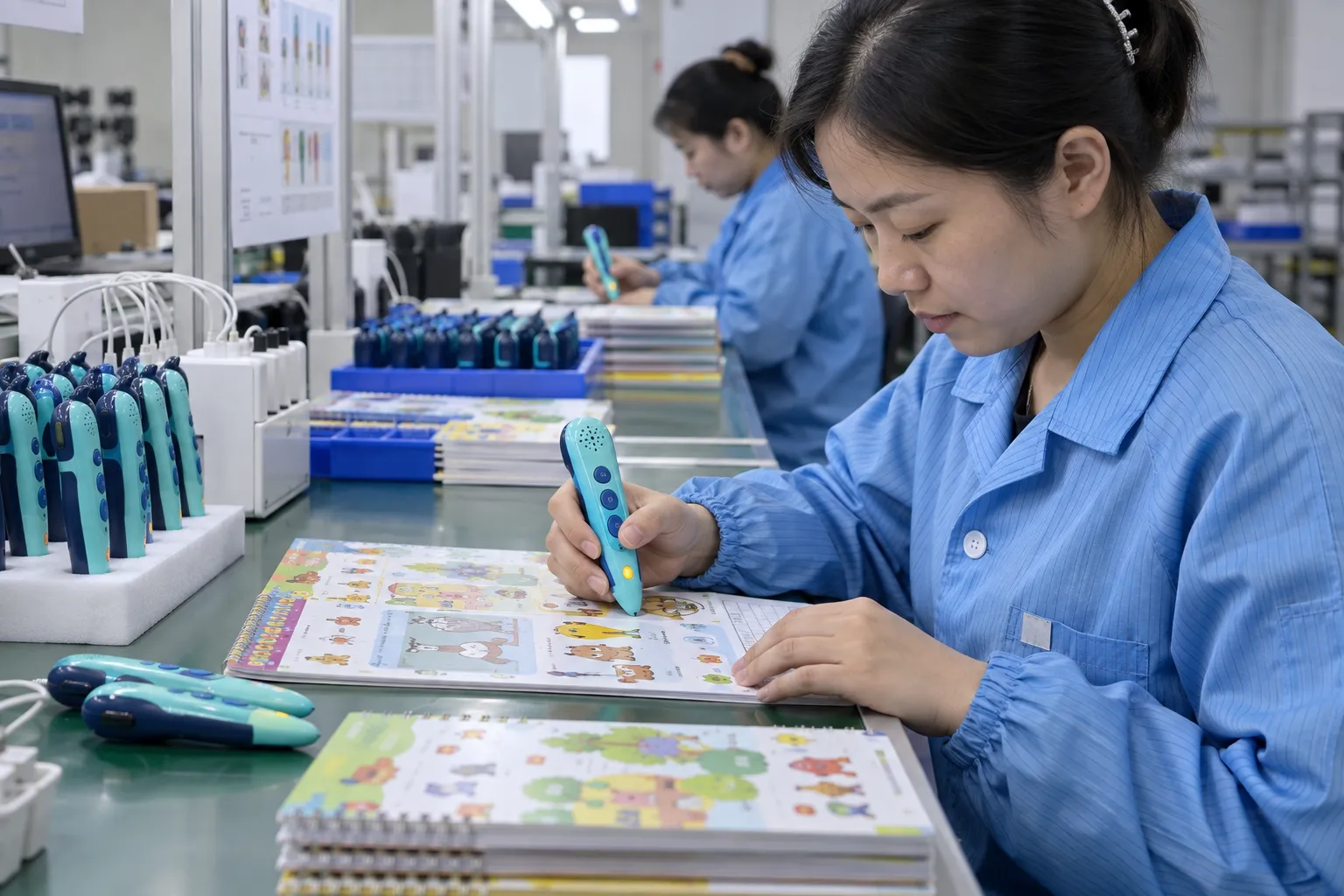
Physical pack and carton checks make freight and retail assumptions less speculative. A defensible check names the sample identity, method, acceptance criterion, result, and person who reviewed a discrepancy.
| Control point | Practical check | Evidence |
|---|---|---|
| Identity and traceability | Check the finished model and variant against normalized supplier quote, HS classification basis, origin, freight and insurance quote, duty/tax assumptions, and per-SKU volume model, sample labels, component revision, and carton marks; photograph or retain identifiable samples. | Record result, defect category, and sample identity |
| Critical product function | finished weight, carton dimensions, pack density, barcode, and SKU segregation Test an early, middle, and late production sample where lot structure allows; inspect more when failures or change history warrant it. | Record result, defect category, and sample identity |
| Market pack and documentation | Verify destination-language instructions, warning and importer details where applicable, product identifier, barcode, pack contents, and the buyer’s final destination and channel document availability. | Record result, defect category, and sample identity |
| Exception closure | Investigate carton dimensions, unit pack, classification, order split, exchange rate, or Incoterm changes. Contain affected stock, determine scope, document corrective action, and repeat the relevant check before release. | Record result, defect category, and sample identity |
Set test frequency from risk and process evidence. Use written defect classes, sampling rules, and reaction plans; the ISO 28590 overview is a starting reference for acceptance sampling by attributes.
Shipment inspection should use the approved product, controlled files, packing specification, label artwork, and purchase order as references. Inspectors should test content from different parts of the library rather than replaying one demonstration item. Allow time before the shipping deadline for containment, root-cause review, corrective action, and reinspection when needed.
See Cakub’s quality-control workflow for the broader sequence from incoming materials through shipment release, or review the factory capability page when evaluating production support.
7. How should safety and compliance planning be handled?
Compliance depends on the exact use, age grading, construction, power, sound, accessories, claims, packaging, and destination market. Review it before design release.
- European Commission Access2Markets trade assistant — use the current official text as a starting point for the final model and market.
- U.S. Customs and Border Protection binding-ruling program — use the current official text as a starting point for the final model and market.
- International Chamber of Commerce Incoterms 2020 overview — use the current official text as a starting point for the final model and market.
Market-specific status: Duties, taxes, currency, and freight rates change; verify live figures and use a broker for import classification and tax treatment.
Relevant official starting points for this topic include European Commission Access2Markets trade assistant, U.S. Customs and Border Protection binding-ruling program, International Chamber of Commerce Incoterms 2020 overview. These links do not determine the complete test plan. Ask an accredited laboratory or qualified compliance adviser to review the final configuration and the markets where the product will be placed. Keep reports, declarations, bills of materials, label approvals, and production identities connected to the exact model and revision.
8. How can buyers compare supplier quotations fairly?
Require line items for hardware, content, tooling, packaging, tests, inspection, freight basis, and exclusions. Request the supplier to separate manufacturing price from testing, document preparation, inspection, rework, freight, duties, and any importer-specific service. Price comparisons should use the same evidence and delivery scope.
Normalize configuration, content, electronics, materials, accessories, packaging, development, tooling, tests, documents, quantity, currency, Incoterm, payment, validity, and exclusions before comparing prices.
9. Common mistakes that create avoidable delay or rework
Accepting a product-family claim as SKU evidence
A file for a similar device may omit Tariff classification, origin, trade measures, and tax treatment require current destination-specific advice. or a changed component in the commercial version. The practical correction is to add an owner, reference file, approval point, and inspection method before the order enters mass production.
Leaving the importer role undefined
The overseas buyer and manufacturer may assume the other party will handle electronic-toy landed cost, creating a gap at customs or retail intake. The practical correction is to add an owner, reference file, approval point, and inspection method before the order enters mass production.
Treating factory function testing as certification
A factory can verify finished weight, carton dimensions, pack density, barcode, and SKU segregation, but the applicable market may demand separate accredited testing, declarations, or importer-issued documents. The practical correction is to add an owner, reference file, approval point, and inspection method before the order enters mass production.
Releasing after an unreviewed change
carton dimensions, unit pack, classification, order split, exchange rate, or Incoterm changes can make old evidence or labels misleading even when the device still appears to work. The practical correction is to add an owner, reference file, approval point, and inspection method before the order enters mass production.
10. Frequently asked questions
Is one supplier report enough for electronic-toy landed cost?
Not automatically. Compare its legal scope, issuing body, sample, model, revision, date, and applicable rules with the actual product and the buyer’s final destination and channel; obtain qualified review where the answer is uncertain.
Who owns the electronic-toy landed cost decision?
The contract should name the buyer, importer, manufacturer, test laboratory, and any adviser. Factory evidence supports the decision, but it does not silently transfer the importer's duties.
When should the evidence be requested?
Before the specification and production-intent sample are approved. Late discovery can require new labels, materials, testing, or a different shipping plan.
What if a component or label changes after testing?
Describe the change, compare it with the tested configuration, assess affected requirements, and document whether additional testing, revised documentation, or buyer approval is necessary.
What should a pre-shipment inspector verify?
Use the approved SKU, sample, artwork, evidence register, and purchase order to check function, construction, labels, pack-out, lot identity, and closure of deviations—not just carton count.
Conclusion: approve a repeatable product system
The best sourcing comparison uses the same sellable set and the same route from factory to destination. The practical outcome is a traceable decision package: an exact SKU, current official rule review, relevant evidence, a controlled factory check, and a shipment release record. Buyers can then compare suppliers and manage exceptions without relying on a generic “compliant” claim.
Planning a custom logic-learning device project?
Send your target user, product format, content scope, market, quantity range, packaging, and launch timing for a structured project review.