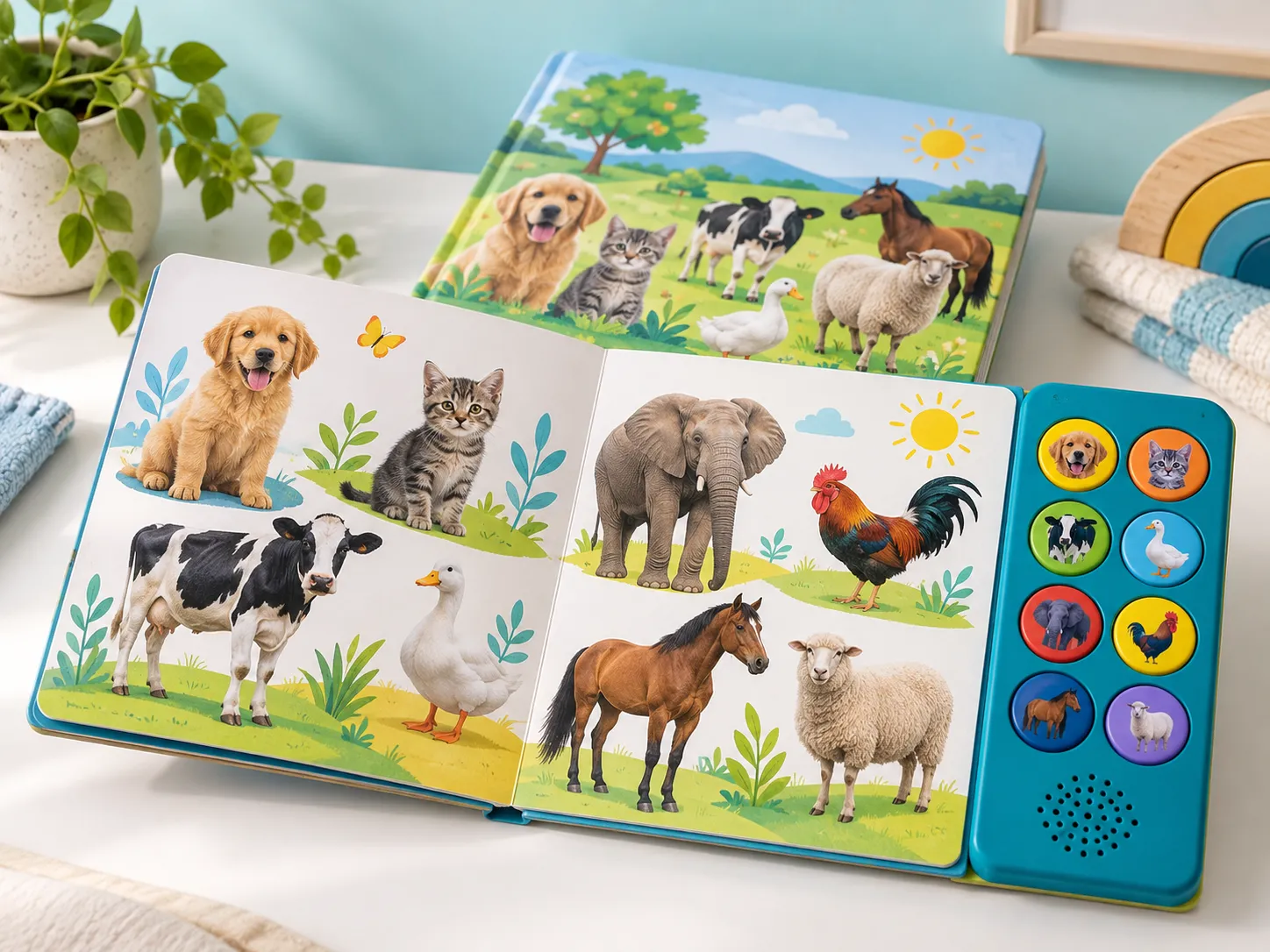
Sound Books for Preschool Classroom Use: A Buyer’s Guide: For preschool classrooms, choose sound books with clear page-button relationships, short teacher-controllable audio, durable construction, understandable power access, and routines for shared handling and storage. The product brief should connect the intended learner or visitor, activity sequence, content scope, adult role, physical setting, success evidence, replenishment model, and market requirements. Approve the complete user journey on representative hardware and media before scaling the program.
A retail sound book may be used occasionally by one child. A classroom copy can be pressed repeatedly, handled by groups, stored upright or in bins, cleaned under institutional routines, and used in a noisy environment. The sourcing question is therefore larger than whether the device can play audio or recognize an input. Buyers need to decide what the product should help the user do, how adults introduce and manage it, which content stays relevant, and how the experience remains consistent across units, languages, packs, and future releases.
This guide is for children’s publishers, museum shops, educational brands, gift companies, retailers, and print sourcing teams. It connects product application, customer requirements, controlled content, factory testing, shipment inspection, packaging, and market documentation without treating one configuration as universal.
For an overview of the available configuration and customization direction, review Cakub’s sound books product page. Buyers who are still comparing formats can also start with the interactive learning product range.
1. What should buyers understand first?
A classroom sound-book resource combines an age-appropriate printed book, mapped audio, teacher pacing, shared-use construction, and institutional care routines. For this guide, “application” means the complete combination of product, content, user action, environment, facilitation, packaging, distribution, support, and evaluation—not a marketing claim attached to standard hardware.
Practical buyer answer: Write a one-page application brief for preschool classroom sound-book use. Include preschool learners and teachers sharing printed audio books, the adult or channel role, a representative teacher introduces the page, chooses when a button is pressed, pauses audio for child response, continues the book, repeats selected sounds, and stores it, the intended support a short story, vocabulary, song, sound-identification, movement, or discussion activity linked to visible pages, content limits, session conditions, storage and charging or battery responsibility, cleaning expectations, and the evidence used to decide whether the format is suitable.
2. Where does this solution fit—and where does it not?
The format is useful when selected sounds enrich teacher-led print interaction without taking control of the lesson. Product selection should begin with the activity and operating model, then move to hardware and customization.
| Decision question | Good fit when | Reconsider when |
|---|---|---|
| Does the interaction support the objective? | Buttons are visible and audio segments are short enough for teachers to pause, discuss, repeat, or skip. | The product plays a long sequence with no practical teacher control. |
| Can the setting operate it consistently? | Staff can manage volume, battery status, cleaning, storage, damaged copies, and turn-taking. | Maintenance information is missing or controls are unsuitable for group handling. |
| Can content and packs remain controlled? | Page, button, track, prompt, teacher use, duration, and language are mapped and reviewed. | The book offers sounds without an evident classroom activity or accurate page context. |
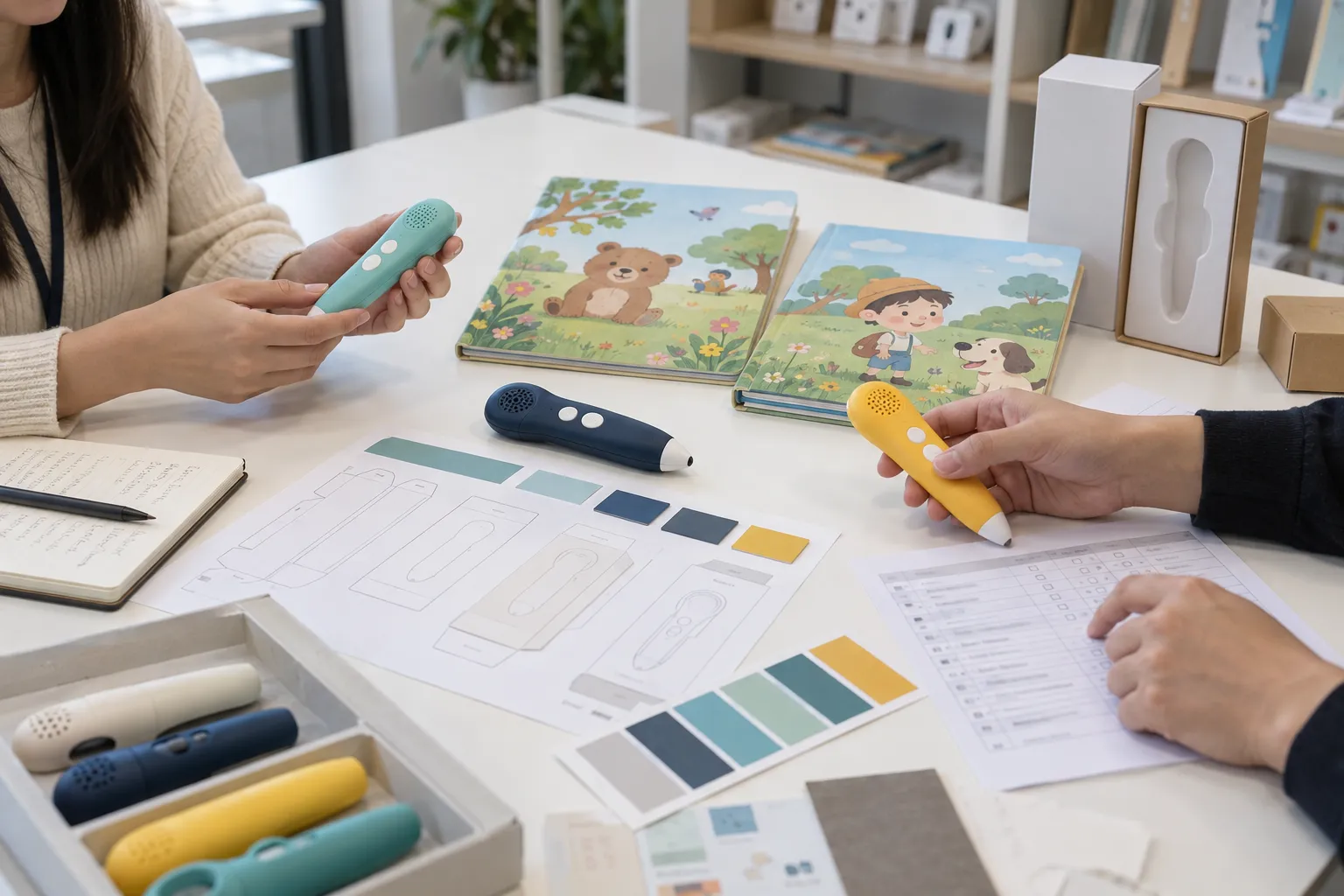
3. Which specification decisions change the project?
The following decisions turn preschool classroom sound-book use from a product idea into an implementable program that suppliers can quote and buyers can evaluate.
1. User, age, and context
Define preschool learners and teachers sharing printed audio books, prior knowledge, language, attention pattern, physical abilities relevant to ordinary use, adult support, group size, and where the product will be used. Record the decision, owner, approval reference, and verification method for the final sound book configuration.
2. Learning or engagement objective
State the observable support a short story, vocabulary, song, sound-identification, movement, or discussion activity linked to visible pages; avoid unsupported promises and separate the product activity from outcomes that require curriculum, teaching, repetition, or wider support. Record the decision, owner, approval reference, and verification method for the final sound book configuration.
3. Interaction and session design
Map teacher introduces the page, chooses when a button is pressed, pauses audio for child response, continues the book, repeats selected sounds, and stores it, including introduction, exploration, feedback, repetition, completion, reset, storage, and the next activity. Record the decision, owner, approval reference, and verification method for the final sound book configuration.
4. Content architecture
Control stories, words, songs, real-world sounds, questions, movement cues, button icons, intentional pauses, languages, page sequence, and teacher prompts, difficulty or sequence, language, track and asset IDs, physical-media mapping, revision ownership, and future expansion. Record the decision, owner, approval reference, and verification method for the final sound book configuration.
5. Operating and channel model
Specify teacher control, group volume, turn taking, battery checks, page cleaning, shelf or bin storage, damaged-book removal, class set count, and replacement, distribution, staff or caregiver instructions, training, cleaning, charging or battery service, replacements, inventory, and customer support. Record the decision, owner, approval reference, and verification method for the final sound book configuration.
6. Evidence and release criteria
Define clear mapping, audible speech without distortion, teacher pacing, durable repeated handling, secure battery access, manageable care, and accurate set inspection, pilot observations, content review, functional tests, workmanship limits, pack-out checks, market documentation, and approval authority. Record the decision, owner, approval reference, and verification method for the final sound book configuration.
| Decision area | What to define | Approval evidence |
|---|---|---|
| User, age, and context | Define preschool learners and teachers sharing printed audio books, prior knowledge, language, attention pattern, physical abilities relevant to ordinary use, adult support, group size, and where the product will be used. | Specification, approved sample, or controlled record |
| Learning or engagement objective | State the observable support a short story, vocabulary, song, sound-identification, movement, or discussion activity linked to visible pages; avoid unsupported promises and separate the product activity from outcomes that require curriculum, teaching, repetition, or wider support. | Specification, approved sample, or controlled record |
| Interaction and session design | Map teacher introduces the page, chooses when a button is pressed, pauses audio for child response, continues the book, repeats selected sounds, and stores it, including introduction, exploration, feedback, repetition, completion, reset, storage, and the next activity. | Specification, approved sample, or controlled record |
| Content architecture | Control stories, words, songs, real-world sounds, questions, movement cues, button icons, intentional pauses, languages, page sequence, and teacher prompts, difficulty or sequence, language, track and asset IDs, physical-media mapping, revision ownership, and future expansion. | Specification, approved sample, or controlled record |
| Operating and channel model | Specify teacher control, group volume, turn taking, battery checks, page cleaning, shelf or bin storage, damaged-book removal, class set count, and replacement, distribution, staff or caregiver instructions, training, cleaning, charging or battery service, replacements, inventory, and customer support. | Specification, approved sample, or controlled record |
| Evidence and release criteria | Define clear mapping, audible speech without distortion, teacher pacing, durable repeated handling, secure battery access, manageable care, and accurate set inspection, pilot observations, content review, functional tests, workmanship limits, pack-out checks, market documentation, and approval authority. | Specification, approved sample, or controlled record |
Plan a preschool classroom sound-book use product program
Send the target users, setting, content concept, market, expected quantity, packaging channel, operating model, and launch window.
4. What should the buyer prepare before requesting a quotation?
A useful quotation pack reduces assumptions without pretending every decision is final. It should distinguish confirmed requirements, preferred options, open questions, buyer-supplied files, supplier responsibilities, and items that will be approved through sampling. For sound book, prepare the following:
- Application brief: Describe preschool learners and teachers sharing printed audio books, support a short story, vocabulary, song, sound-identification, movement, or discussion activity linked to visible pages, teacher introduces the page, chooses when a button is pressed, pauses audio for child response, continues the book, repeats selected sounds, and stores it, session length, adult role, environment, and intended evidence.
- Content and SKU matrix: List stories, words, songs, real-world sounds, questions, movement cues, button icons, intentional pauses, languages, page sequence, and teacher prompts, language, level, hardware or media mapping, pack, barcode, market, quantity, and approval status.
- Operating plan: Define teacher control, group volume, turn taking, battery checks, page cleaning, shelf or bin storage, damaged-book removal, class set count, and replacement, onboarding, instructions, charging or batteries, cleaning, storage, replacement, replenishment, support, and feedback collection.
- Book specification: Provide trim size, page count, binding, board or paper construction, button count, module position, and target age.
- Artwork and audio index: List page, printed prompt, button or switch position, filename, language, duration, and current revision.
- Market and commercial plan: State destination countries, quantity range, retail packaging, launch timing, battery choice, and inspection expectations.
5. How should development move from concept to shipment?
Develop the product and application together. A reliable process tests the activity with representative content before committing all artwork, recordings, tooling, packaging, or inventory.
- Confirm the requirement brief: Confirm preschool learners and teachers sharing printed audio books, support a short story, vocabulary, song, sound-identification, movement, or discussion activity linked to visible pages, setting, adult or channel role, content scope, markets, quantities, and launch decision. Record the responsible party, open questions, and approval evidence.
- Create the controlled map: Map teacher introduces the page, chooses when a button is pressed, pauses audio for child response, continues the book, repeats selected sounds, and stores it through physical actions, content IDs, expected responses, adult prompts, session state, completion, reset, and storage. Record the responsible party, open questions, and approval evidence.
- Review feasibility and risk: Review audio too quiet or loud for groups, overlapping repeated presses, page and button confusion, binding damage, battery access, uncleanable claims, long fixed tracks, and lost books, content accuracy, age and language fit, misuse, maintenance, inventory, packaging, support, compliance dependencies, and unsupported claims. Record the responsible party, open questions, and approval evidence.
- Build a purpose-defined prototype: Build a representative preschool classroom sound-book use pilot with final-style content and observe setup, independent and supported use, confusion points, durability, pack-out, and staff or caregiver feedback. Record the responsible party, open questions, and approval evidence.
- Approve a production-intent sample: Combine final-style durable sound book with visible controls, short mapped audio, secure battery module, teacher activity notes, and storage, representative content, interaction mapping, audio, artwork, firmware, physical media, instructions, labels, accessories, and channel packaging and close measurable comments before material release. Record the responsible party, open questions, and approval evidence.
- Release controlled production files: Freeze the bill of materials, application brief, user journey, content matrix, asset manifest, SKU plan, operating instructions, pilot record, test plan, and release checklist, packaging artwork, test method, and approval references. Record the responsible party, open questions, and approval evidence.
- Inspect and release the shipment: Sample across the order, reproduce representative user journeys, verify pack-out, and document disposition before dispatch. Record the responsible party, open questions, and approval evidence.

6. What should factory testing and shipment inspection cover?
Testing should verify both the product function and the conditions needed for the proposed application. A device can pass an electrical check while still being confusing to set up, difficult to manage in a group, or mismatched to the content.
| Control point | Practical check | Evidence |
|---|---|---|
| Representative user journey | Run teacher introduces the page, chooses when a button is pressed, pauses audio for child response, continues the book, repeats selected sounds, and stores it from unpacking and setup through use, feedback, completion, reset, and storage; record prompts, delays, errors, and recovery. | Record result, defect category, and sample identity |
| Content and mapping accuracy | Sample stories, words, songs, real-world sounds, questions, movement cues, button icons, intentional pauses, languages, page sequence, and teacher prompts across levels, languages, library positions, physical media, correct and incorrect actions, and future-pack boundaries. | Record result, defect category, and sample identity |
| Operating-condition check | Verify teacher control, group volume, turn taking, battery checks, page cleaning, shelf or bin storage, damaged-book removal, class set count, and replacement, repeated sessions, power or battery routine, volume, storage, cleaning instructions, accessories, and replacement steps. | Record result, defect category, and sample identity |
| Program pack-out audit | Confirm the device, every content item, teacher or caregiver material, instructions, labels, barcode, storage, retail or institutional pack, and carton allocation. | Record result, defect category, and sample identity |
| Button-to-audio mapping | Press every button across representative books and compare page prompt, switch position, filename, and language. | Record result, defect category, and sample identity |
| Print and binding | Check color, registration, lamination, die cutting, page order, board edges, binding, warpage, and approved tolerances. | Record result, defect category, and sample identity |
| Module performance | Verify button feel, speaker clarity, volume, battery access, power behavior, component retention, and shutdown. | Record result, defect category, and sample identity |
| Pack-out and carton | Confirm instructions, labels, accessories, protective fit, barcode, retail presentation, and carton count. | Record result, defect category, and sample identity |
Set test frequency from risk and process evidence. Use written defect classes, sampling rules, and reaction plans; the ISO 28590 overview is a starting reference for acceptance sampling by attributes.
Shipment inspection should use the approved product, controlled files, packing specification, label artwork, and purchase order as references. Inspectors should test content from different parts of the library rather than replaying one demonstration item. Allow time before the shipping deadline for containment, root-cause review, corrective action, and reinspection when needed.
See Cakub’s quality-control workflow for the broader sequence from incoming materials through shipment release, or review the factory capability page when evaluating production support.
7. How should safety and compliance planning be handled?
Compliance depends on the exact use, age grading, construction, power, sound, accessories, claims, packaging, and destination market. Review it before design release.
- U.S. CPSC toy safety guidance — use the current official text as a starting point for the final model and market.
- European Commission toy-safety information — use the current official text as a starting point for the final model and market.
- IEC 62115 electric-toy standard overview — use the current official text as a starting point for the final model and market.
- NAEYC technology and media guidance — use the current official text as a starting point for the final model and market.
Relevant official starting points for this topic include U.S. CPSC toy safety guidance, European Commission toy-safety information, IEC 62115 electric-toy standard overview, NAEYC technology and media guidance. These links do not determine the complete test plan. Ask an accredited laboratory or qualified compliance adviser to review the final configuration and the markets where the product will be placed. Keep reports, declarations, bills of materials, label approvals, and production identities connected to the exact model and revision.
8. How can buyers compare supplier quotations fairly?
Ask suppliers to quote the complete preschool classroom sound-book use configuration: hardware, customization, content volume, languages, programming, media, accessories, instructions, packaging, sample stages, pilot quantity, testing, documents, production quantity by SKU, replenishment, Incoterm, and exclusions.
Normalize configuration, content, electronics, materials, accessories, packaging, development, tooling, tests, documents, quantity, currency, Incoterm, payment, validity, and exclusions before comparing prices.
9. Common mistakes that create avoidable delay or rework
Starting from a feature list
Features do not prove that preschool learners and teachers sharing printed audio books can complete teacher introduces the page, chooses when a button is pressed, pauses audio for child response, continues the book, repeats selected sounds, and stores it or that the operating team can manage the program. The practical correction is to add an owner, reference file, approval point, and inspection method before the order enters mass production.
Treating content as an afterthought
stories, words, songs, real-world sounds, questions, movement cues, button icons, intentional pauses, languages, page sequence, and teacher prompts determines interaction, storage, recording, print, mapping, review, packaging, and long-term value. The practical correction is to add an owner, reference file, approval point, and inspection method before the order enters mass production.
Skipping a representative pilot
A polished supplier demonstration may not expose audio too quiet or loud for groups, overlapping repeated presses, page and button confusion, binding damage, battery access, uncleanable claims, long fixed tracks, and lost books, setup friction, group-management needs, or unclear adult instructions. The practical correction is to add an owner, reference file, approval point, and inspection method before the order enters mass production.
Making unsupported outcome claims
Product application should be described accurately; learning, developmental, therapeutic, or behavioral outcomes require suitable evidence and context. The practical correction is to add an owner, reference file, approval point, and inspection method before the order enters mass production.
10. Frequently asked questions
Is preschool classroom sound-book use suitable for preschool learners and teachers sharing printed audio books?
It can be when the content, interaction, physical design, adult role, session, and market requirements are appropriate. Evaluate the actual configuration rather than the category name alone.
What content is needed for preschool classroom sound-book use?
Start with a representative set covering stories, words, songs, real-world sounds, questions, movement cues, button icons, intentional pauses, languages, page sequence, and teacher prompts, then test sequence, clarity, language, mapping, repetition, difficulty, and expansion before producing the full library.
Should the product be used independently or with an adult?
Define both modes explicitly. preschool classroom sound-book use may support independent exploration, guided activity, group facilitation, or a planned combination; instructions and feedback should match.
How should a buyer run a pilot?
Use production-intent hardware and representative content in the intended setting. Record setup time, user actions, prompts, errors, engagement with the activity, maintenance, staff or caregiver feedback, and product defects without claiming results the pilot cannot prove.
What should be inspected before shipment?
Inspect function, content identity, language and mapping, power behavior, workmanship, media and accessories, instructions, labels, SKU segregation, retail or institutional pack-out, carton quantity, and approved references.
Conclusion: approve a repeatable product system
Select the whole classroom-use system—content, control, durability, care, storage, and teacher guidance—not just an attractive cover. The purchasing decision should be based on a controlled application system that can be explained to users, repeated in production, supported by the channel, and checked before shipment.
A successful sound book project is not defined by a single attractive sample. It is defined by whether the approved user experience can be reproduced with controlled files, stable materials, clear workmanship criteria, suitable factory testing, traceable packaging, and a shipment-inspection method that reflects customer requirements. That is the standard buyers should use when comparing suppliers and deciding whether a project is ready for production.
Planning a custom sound book project?
Send your target user, product format, content scope, market, quantity range, packaging, and launch timing for a structured project review.