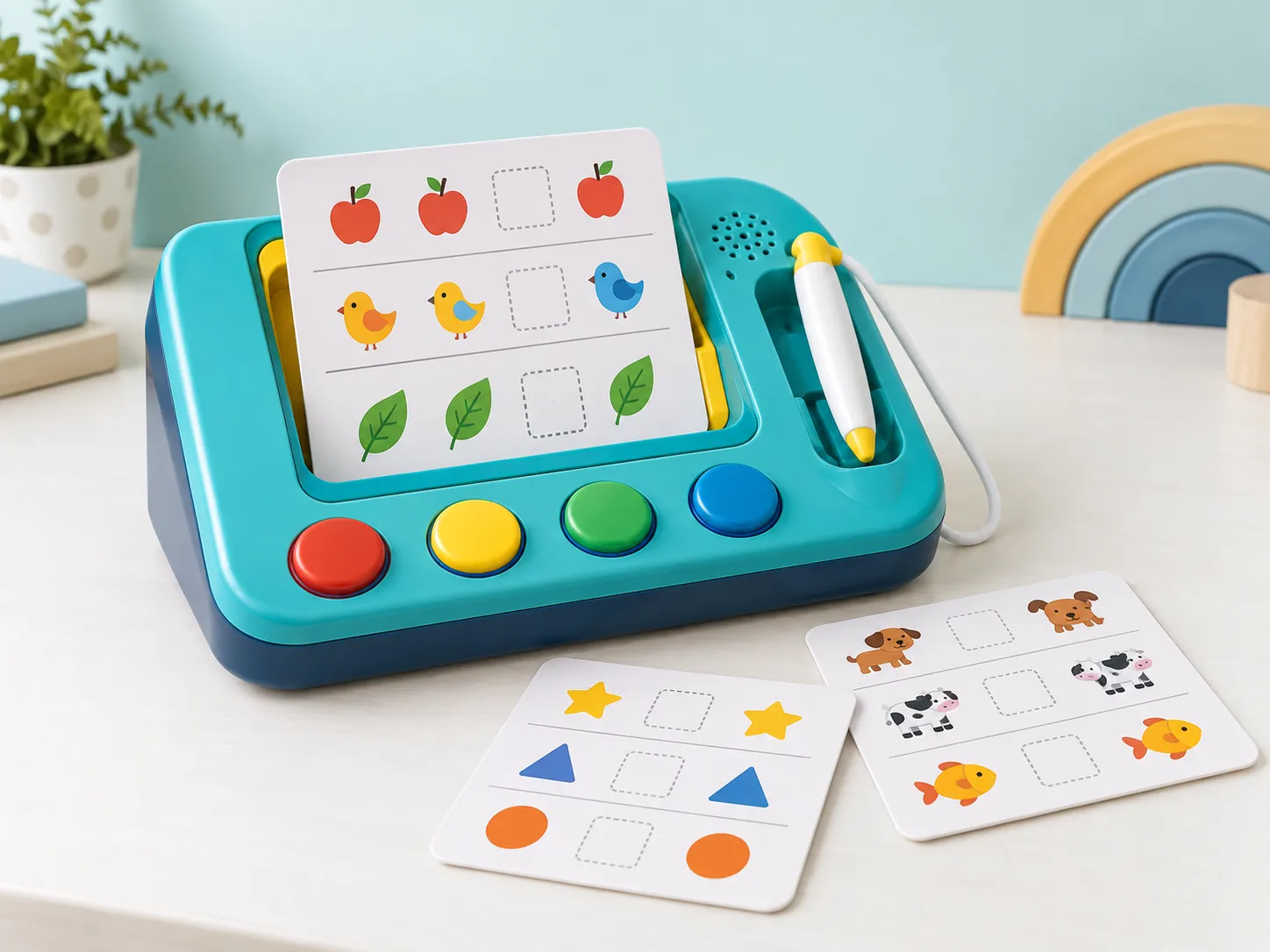
Tactile Accessibility in Screen-Free Logic Learning Toys: Use redundant shape, texture, position, and audio cues where they serve the activity; test identification and answer correction with representative children before claiming an inclusive design. For a B2B order, the decision should be supported by a tactile-feature and feedback map linked to activity and age range, a production-intent sample, a named approval owner, and a check that can be repeated before shipment. The approach changes with the final product, customer requirements, destination market, and operating model.
A logic set can look clear on a product photograph yet rely on two similar colors or a tiny arrow molded into a token. The challenge is not merely naming a color but enabling a child to manipulate the task independently or with planned adult support. The hidden cost is rarely the isolated component: it is disagreement between the child-facing experience, content files, manufacturing revision, retail promise, and after-sale support. A useful buyer guide therefore follows one real user journey from setup through repeated use, failure recovery, replenishment, and the next production order.
This guide is for educational publishers, STEM learning brands, curriculum teams, toy companies, and sourcing managers. It connects product application, customer requirements, controlled content, factory testing, shipment inspection, packaging, and market documentation without treating one configuration as universal.
For an overview of the available configuration and customization direction, review Cakub’s logic-thinking learning devices product page. Buyers who are still comparing formats can also start with the interactive learning product range.
1. What should buyers understand first?
tactile logic-device accessibility is the coordinated choice of interaction, content, physical construction, and support rules that lets children identifying, placing, and correcting physical puzzle pieces complete the intended activity. Here “tactile logic-device accessibility” refers to the complete operational system around the saleable product, not a feature name in a catalogue. Its boundary includes the physical product, content or media, instructions, controlled files, packaging, service expectations, and the evidence a buyer will accept.
Practical buyer answer: Choose tactile differences that remain meaningful after production tolerances and cleaning, and avoid making the correct answer physically obvious when reasoning is the intended skill. Put the answer in a one-page decision record: who uses it, what they must do, which variation is allowed, how the supplier proves it, and what happens when the child cannot distinguish pieces, orientation, or feedback using the available cues. The record should be intelligible to product, editorial, factory, quality, and customer-support teams.
2. Where does this solution fit—and where does it not?
Assess tactile logic-device accessibility against the actual learning task and channel, not only against a catalogue feature list. A strong fit means the buyer can operate and maintain the choice after the first attractive sample, not merely demonstrate it once.
| Decision question | Good fit when | Reconsider when |
|---|---|---|
| Does it serve the intended user? | The intended user can distinguish and manipulate pieces using more than one cue without losing the learning objective. | The design should not claim to meet every disability need from one informal pilot; accessibility should be specified for target users and evaluated with appropriate advisers. |
| Can the product be controlled? | The team can trace a tactile-feature and feedback map linked to activity and age range to the current SKU, sample, and supplier production record. | Files or components are shared informally, making an approved version impossible to identify. |
| Can the program survive repeat orders? | The tactile logic-device accessibility decision includes replenishment, replacement, updates, and a documented handover. | The first shipment works, but no party owns the next batch, support question, or revision. |
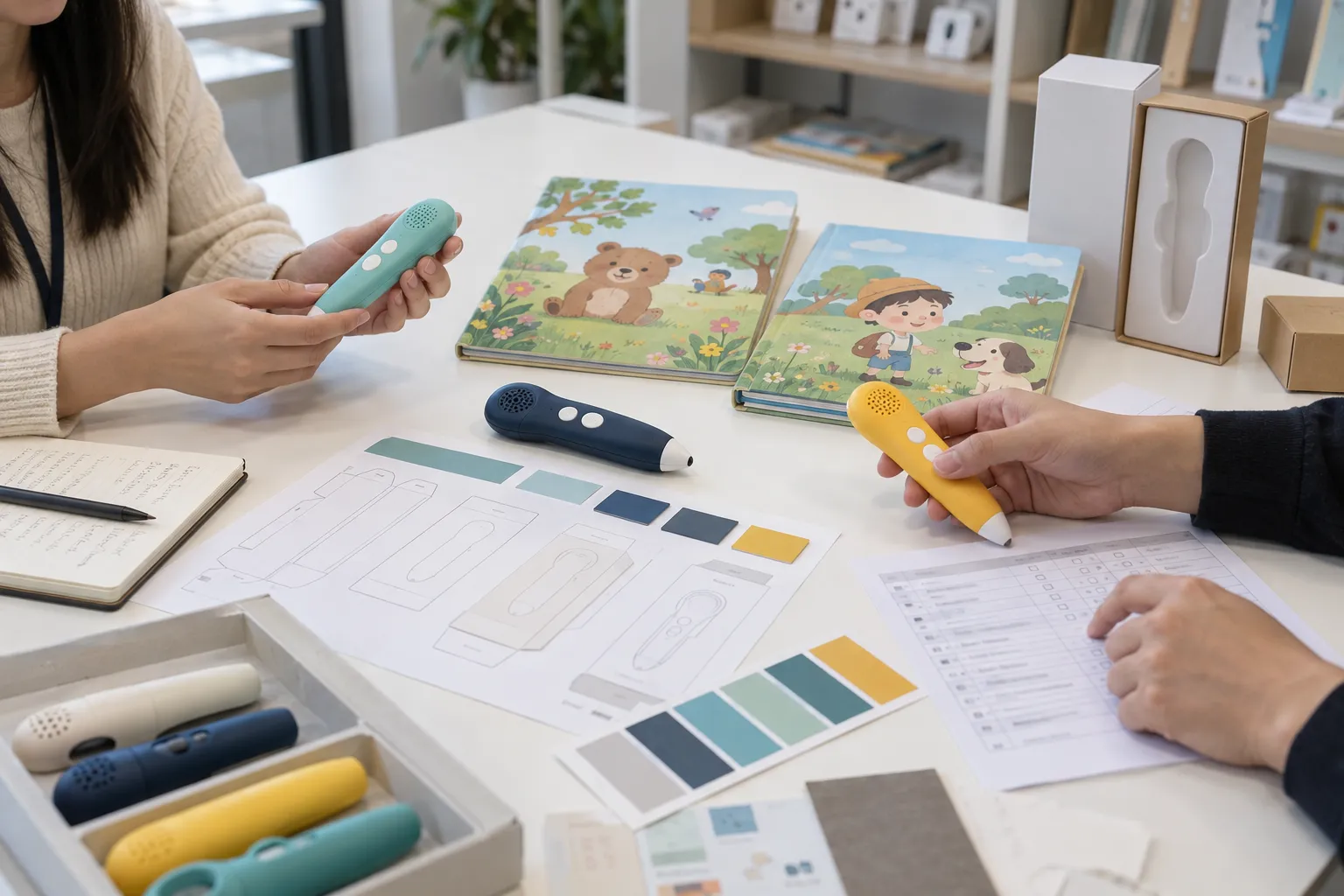
3. Which specification decisions change the project?
The project team should resolve the following trade-offs before claiming that the screen-free logic learning device is ready for the intended user. These decisions connect customer requirements to a measurable product and a sustainable operating model.
1. User task and service context
Recreate the complete user journey: let children sort, orient, place, correct, and store pieces while observing whether they use shape, texture, position, sound, or adult help Describe children identifying, placing, and correcting physical puzzle pieces, ordinary use, foreseeable mistakes, adult or channel support, storage, and the expected response to an error. Record the decision, owner, approval reference, and verification method for the final logic-learning device configuration.
2. Architecture or format choice
Choose tactile differences that remain meaningful after production tolerances and cleaning, and avoid making the correct answer physically obvious when reasoning is the intended skill. Compare an existing platform with any custom feature, and distinguish a necessary difference from a decorative one. Record the decision, owner, approval reference, and verification method for the final logic-learning device configuration.
3. Content and variant identity
Keep a tactile-feature and feedback map linked to activity and age range aligned with language, artwork, audio, hardware, instructions, and supported edition. Link every relevant file or physical piece to a stable ID, language, edition, market, owner, and revision. Record the decision, owner, approval reference, and verification method for the final logic-learning device configuration.
4. Approval evidence
Define a tactile-feature and feedback map linked to activity and age range, the production-intent sample, review method, acceptance threshold, and who signs the decision. Record open assumptions instead of hiding them in a quotation. Record the decision, owner, approval reference, and verification method for the final logic-learning device configuration.
5. Factory and shipment control
Specify Check let children sort, orient, place, correct, and store pieces while observing whether they use shape, texture, position, sound, or adult help against a production-intent sample and the approved configuration. Decide which checks happen on every unit, which are sampled, and what must be held when a critical mismatch appears. Record the decision, owner, approval reference, and verification method for the final logic-learning device configuration.
6. Lifecycle and handover
Preserve a tactile-feature and feedback map linked to activity and age range and review it after any change that could cause the child cannot distinguish pieces, orientation, or feedback using the available cues. Give customer support a usable version lookup, spare or update route, escalation rule, and evidence needed for a repeat order. Record the decision, owner, approval reference, and verification method for the final logic-learning device configuration.
Access and answer leakage are different risks
A tactile marker can make pieces identifiable, which supports access. If it also encodes the correct solution directly, the task may no longer test the planned reasoning skill. Review the cue as part of each activity’s answer logic.
Buyer scenario and decision record
Two tokens have the same outline but different printed colors. A revision adds distinct edge features while retaining similar insertion effort; the content team checks that the tactile difference helps identify tokens without revealing puzzle answers.
Where the evidence stops
The design should not claim to meet every disability need from one informal pilot; accessibility should be specified for target users and evaluated with appropriate advisers. This is a design and procurement judgment, not evidence that a child outcome is guaranteed. Record the observation method, participant context, product revision, and limitations before turning a pilot into a marketing claim.
What an approvable result looks like
The intended user can distinguish and manipulate pieces using more than one cue without losing the learning objective. let children sort, orient, place, correct, and store pieces while observing whether they use shape, texture, position, sound, or adult help The buyer should retain the sample and acceptance record so a later factory lot can be checked against the same reference rather than a memory of the demonstration.
Plan a tactile logic-device accessibility program
Send your user case, current product files, target market, quantity by SKU, expected service model, and the decision that remains open. We can frame a sample and specification review.
4. What should the buyer prepare before requesting a quotation?
A useful quotation pack reduces assumptions without pretending every decision is final. It should distinguish confirmed requirements, preferred options, open questions, buyer-supplied files, supplier responsibilities, and items that will be approved through sampling. For logic-learning device, prepare the following:
- User and channel brief: Describe children identifying, placing, and correcting physical puzzle pieces, use environment, age grade, adult role, product claims, retail or institutional channel, support capacity, and launch timing.
- Controlled project package: Include a tactile-feature and feedback map linked to activity and age range, current bill of materials, artwork, content or software manifest, language and SKU matrix, production-intent sample reference, and rights or supplier responsibilities.
- Decision and acceptance sheet: List the options, the child cannot distinguish pieces, orientation, or feedback using the available cues risk, practical test method, sample size or selection basis, inspection disposition, owner, deadline, and next-order impact.
5. How should development move from concept to shipment?
Move tactile logic-device accessibility through prototype, user observation, controlled revision, and a production-intent sample. Use visible gates so a concept demonstration is not mistaken for an approved production system.
- Confirm the requirement brief: Start from children identifying, placing, and correcting physical puzzle pieces, the actual activity, saleable set, target markets, quantity range, service model, and the outcome the buyer can realistically assess. Record the responsible party, open questions, and approval evidence.
- Create the controlled map: Build a tactile-feature and feedback map linked to activity and age range as a controlled map from user action through product response, physical or digital media, version, packaging, and support record. Record the responsible party, open questions, and approval evidence.
- Review feasibility and risk: Review the child cannot distinguish pieces, orientation, or feedback using the available cues, component and file dependencies, foreseeable misuse, usability, production capability, market requirements, and inventory implications. Record the responsible party, open questions, and approval evidence.
- Build a purpose-defined prototype: Test a representative tactile logic-device accessibility sample in the intended context with realistic content and service conditions; record what works, what fails, and the corrective action. Record the responsible party, open questions, and approval evidence.
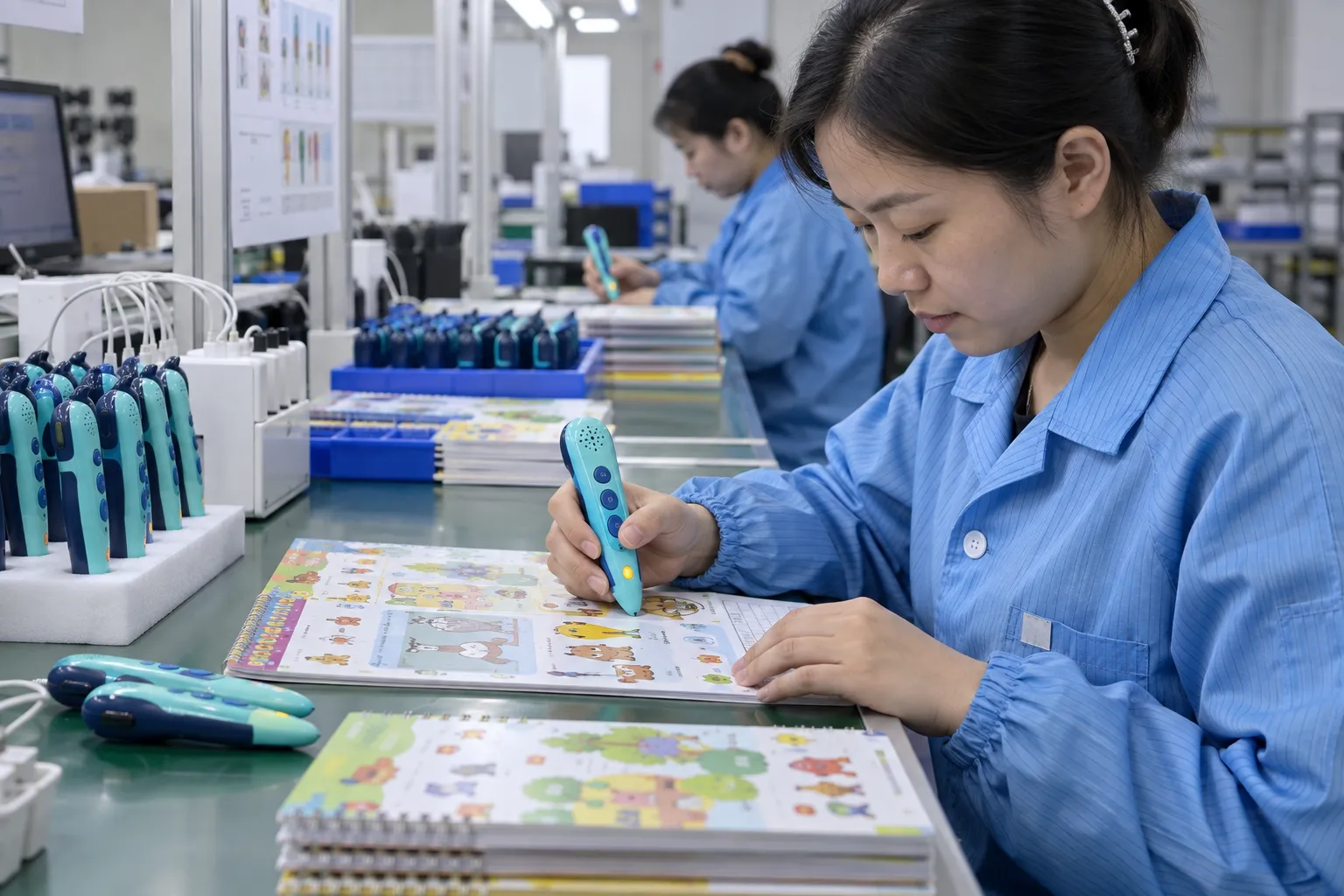
6. What should factory testing and shipment inspection cover?
Test the complete screen-free logic learning device, including ordinary handling, adult help where expected, and a realistic failure or recovery path. The check should be reproducible by a second reviewer using the same sample identity and acceptance record; avoid relying on an informal demonstration.
| Control point | Practical check | Evidence |
|---|---|---|
| Representative user journey | Recreate the complete user journey: let children sort, orient, place, correct, and store pieces while observing whether they use shape, texture, position, sound, or adult help Run setup, intended action, wrong action, recovery, repetition, storage, and support or replacement steps on a production-intent sample. | Record result, defect category, and sample identity |
| Identity and content check | Compare a tactile-feature and feedback map linked to activity and age range with labels, files, components, physical media, language, SKU, and revision on units from more than one production position. | Record result, defect category, and sample identity |
| Critical function and durability | Check let children sort, orient, place, correct, and store pieces while observing whether they use shape, texture, position, sound, or adult help against a production-intent sample and the approved configuration Document any failure and repeat the check after corrective action rather than just replacing the inspected sample. | Record result, defect category, and sample identity |
| Shipment and service readiness | Verify the packed set, instructions, barcode or lot identity, accessories, carton allocation, spare or update plan, and support contact route. | Record result, defect category, and sample identity |
Set test frequency from risk and process evidence. Use written defect classes, sampling rules, and reaction plans; the ISO 28590 overview is a starting reference for acceptance sampling by attributes.
Shipment inspection should use the approved product, controlled files, packing specification, label artwork, and purchase order as references. Inspectors should test content from different parts of the library rather than replaying one demonstration item. Allow time before the shipping deadline for containment, root-cause review, corrective action, and reinspection when needed.
See Cakub’s quality-control workflow for the broader sequence from incoming materials through shipment release, or review the factory capability page when evaluating production support.
7. Which external standards and evidence should buyers check?
Lifecycle decisions can touch product safety, intellectual-property permissions, trade-item identification, materials claims, and learning use. Which sources apply depends on the exact product, age grading, construction, claim, sales market, and contract. Check applicability before design or content release; a linked source is not evidence that a particular product has been certified or licensed.
- UNICEF disability-inclusive early childhood development kit — use the current official text as a starting point for the final model and market.
- NAEYC technology and media guidance — use the current official text as a starting point for the final model and market.
- U.S. CPSC toy safety guidance — use the current official text as a starting point for the final model and market.
Relevant official starting points for this topic include UNICEF disability-inclusive early childhood development kit, NAEYC technology and media guidance, U.S. CPSC toy safety guidance. These sources are not substitutes for a project-specific decision. Use qualified product-safety, legal, standards, or certification advisers as relevant; keep the review, applicable evidence, file approvals, and production identity connected to the exact model and revision.
8. How can buyers compare supplier quotations fairly?
Ask suppliers to price the tactile logic-device accessibility configuration and show the trade-off against a simpler option. Ask suppliers to show configuration, one-time engineering, content work, samples, tooling, materials, inspection, pack-out, replenishment, service stock, Incoterm, and exclusions on the same basis.
Normalize configuration, content, electronics, materials, accessories, packaging, development, tooling, tests, documents, quantity, currency, Incoterm, payment, validity, and exclusions before comparing prices.
9. Common mistakes that create avoidable delay or rework
Approving a feature instead of a user journey
The design should not claim to meet every disability need from one informal pilot; accessibility should be specified for target users and evaluated with appropriate advisers. A function that works once may still be confusing, fragile, or expensive to support. The practical correction is to add an owner, reference file, approval point, and inspection method before the order enters mass production.
Losing the approved version
Without a tactile-feature and feedback map linked to activity and age range, an attractive sample cannot reliably identify the right content, component, label, or future reprint. The practical correction is to add an owner, reference file, approval point, and inspection method before the order enters mass production.
Ignoring the failure path
When the child cannot distinguish pieces, orientation, or feedback using the available cues, no one knows whether to replace, repair, update, quarantine, or re-test the product. The practical correction is to add an owner, reference file, approval point, and inspection method before the order enters mass production.
Quoting only the first shipment
Preserve a tactile-feature and feedback map linked to activity and age range and review it after any change that could cause the child cannot distinguish pieces, orientation, or feedback using the available cues. A low initial price may conceal replacement media, reprogramming, localization, after-sale labor, or another setup charge. The practical correction is to add an owner, reference file, approval point, and inspection method before the order enters mass production.
10. Frequently asked questions
When is tactile logic-device accessibility worth a custom development project?
When the user action, content, service need, or channel model cannot be met reliably by an existing platform. Test the difference on representative content and calculate the operating burden before tooling.
What should be approved before mass production?
Approve a production-intent sample together with a tactile-feature and feedback map linked to activity and age range, final content and labels, component choices, acceptance method, packaging, and responsibility for open items.
How should a buyer test for the child cannot distinguish pieces, orientation, or feedback using the available cues?
Choose a realistic failure scenario, define the expected user and support response, reproduce it on representative samples, and record the disposition and affected version or lot.
Can the same platform support several SKUs?
Often yes, if each SKU has controlled hardware, content, packaging, barcode, market, language, and version identity. Shared parts should not erase differences important to the user or retailer.
What should be checked before shipment?
Inspect representative function, content identity, construction, labels, accessories, retail pack, master carton, lot traceability, and closure of every critical deviation against the approved reference.
Conclusion: approve a repeatable product system
The best tactile logic-device accessibility decision is one the buyer can explain, reproduce, inspect, and support after shipment. A strong tactile logic-device accessibility decision is visible in the final product, factory records, pack-out, and customer-support procedure. That traceability makes the next order easier to quote, inspect, update, and defend when a problem appears.
Planning a custom logic-learning device project?
Send your target user, product format, content scope, market, quantity range, packaging, and launch timing for a structured project review.