
Talking Plush Cost and MOQ: A Quotation Guide for Buyers: talking plush toy cost and MOQ depend on the selected platform, customization depth, character size, pattern complexity, fabric, embroidery, filling, module, triggers, speaker, battery, closures, and workmanship, content volume, packaging, test and documentation scope, SKU split, and material purchasing constraints. Buyers should request an itemized quotation with common assumptions and ask what operational constraint creates each minimum.
Price questions are legitimate, but a number without configuration can mislead a sourcing decision. The same product name may describe a standard platform with changed artwork or a new mechanical, electronic, content, and packaging system. MOQ can also refer to different constraints: a factory order, component purchase, print run, fabric color, packaging SKU, or language version.
This guide is written for character licensors, educational brands, publishers, retailers, gift companies, and plush-toy sourcing teams. It addresses the questions that normally appear between the first concept discussion and a production-ready quotation: product application, customer requirements, content ownership, sample purpose, factory testing, shipment inspection, packaging, and market-specific documentation. It does not present universal specifications because talking-plush should be engineered around the final user, configuration, claims, sales market, and distribution plan.
For an overview of the available configuration and customization direction, review Cakub’s talking plush toys product page. Buyers who are still comparing formats can also start with the interactive learning product range.
1. What should buyers understand first?
A commercial cost model separates recurring unit content from one-time development and tooling, optional services, compliance work, samples, packaging, logistics basis, and risk assumptions. MOQ should be stated by cause and SKU rather than as one unexplained number.
Practical buyer answer: Freeze a comparison configuration, request price breaks and separate one-time fees, normalize inclusions, and build scenarios for launch quantity, forecast quantity, and SKU mix. Then evaluate landed and lifecycle implications rather than negotiating only the ex-factory unit price.
The most reliable starting point is a one-page use-case description. State who uses the product, what physical action starts the interaction, what the product should do, what happens next, and how success is observed. This prevents a supplier from substituting a familiar standard product for a requirement that actually needs different electronics, files, construction, firmware, or packaging.
2. Where does this solution fit—and where does it not?
Cost optimization is most productive when buyer and supplier can see which requirements create value and which create complexity without improving the user experience.
| Decision question | Good fit when | Reconsider when |
|---|---|---|
| Are quotes based on the same configuration? | character size, pattern complexity, fabric, embroidery, filling, module, triggers, speaker, battery, closures, and workmanship, content, accessories, packaging, testing, and documents are listed identically. | One offer is a standard platform and another includes custom development. |
| Is MOQ explained? | Each minimum is tied to a component, process, print run, material, color, language, pack, or production setup. | A single quantity is presented without the constraint behind it. |
| Are scenarios compared? | Launch, replenishment, multi-SKU, and forecast cases include one-time cost allocation and logistics. | The lowest unit price at an unrealistic volume drives the decision. |
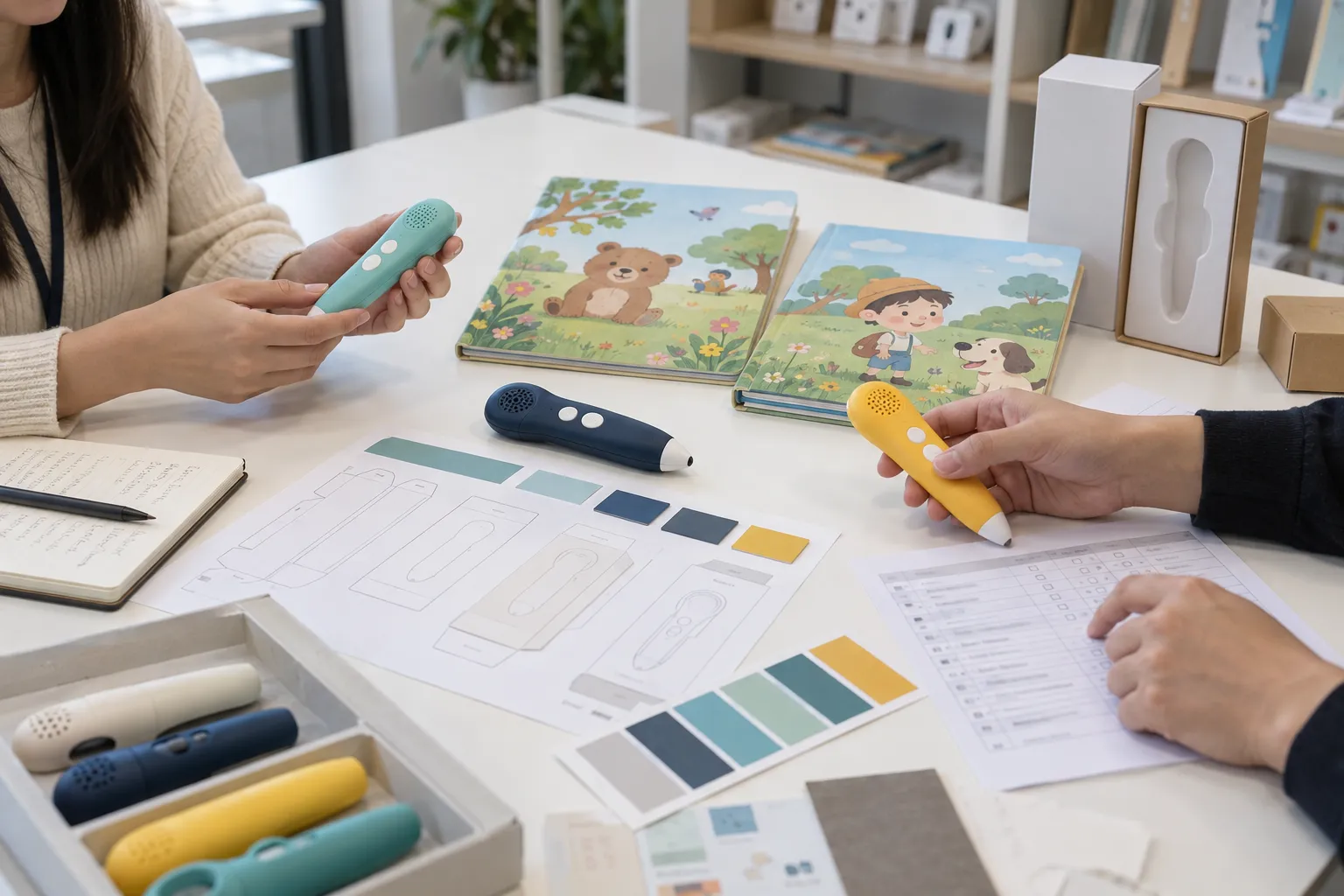
3. Which specification decisions change the project?
Commercial decisions should preserve critical user and safety requirements while simplifying features, variants, or presentation that do not justify their cost or minimum.
1. Platform and customization depth
Separate existing-platform changes from new character size, pattern complexity, fabric, embroidery, filling, module, triggers, speaker, battery, closures, and workmanship, enclosure, tooling, electronics, firmware, content, and construction work. This decision should be closed before detailed quotation because it affects several downstream assumptions. For talking-plush, the useful question is not whether a feature is available in theory, but how it will be implemented, approved, repeated in production, and checked before shipment.
2. Content and programming scope
Quantify tracks, languages, cards or pages, mapping records, editing, encoding, loading, updates, and approval rounds. A supplier can only validate this point when the intended user action and acceptable response are observable. For talking-plush, the useful question is not whether a feature is available in theory, but how it will be implemented, approved, repeated in production, and checked before shipment.
3. Material and component basis
List key approved items, grade or performance, color, finish, availability, minimum purchase, alternatives, and change-control expectations. Treat this as a controlled product requirement rather than an informal preference in an email thread. For talking-plush, the useful question is not whether a feature is available in theory, but how it will be implemented, approved, repeated in production, and checked before shipment.
4. SKU architecture
Split quantities by model, color, language, content set, accessory bundle, retail box, barcode, and delivery batch. The approved sample should demonstrate this requirement with representative content and production-style materials. For talking-plush, the useful question is not whether a feature is available in theory, but how it will be implemented, approved, repeated in production, and checked before shipment.
5. Quality and compliance scope
Define samples, fixtures, line tests, inspection, laboratory work, reports, technical documents, traceability, and reinspection assumptions. Document the decision in the specification, sample comments, and final inspection checklist so each team uses the same reference. For talking-plush, the useful question is not whether a feature is available in theory, but how it will be implemented, approved, repeated in production, and checked before shipment.
6. Packaging and delivery basis
Compare complete pack-out, retail and master packaging, carton data, Incoterm, destination, route, battery implications, and shipment schedule. If the requirement is still open, ask the supplier to quote the alternatives separately instead of hiding the difference in one price. For talking-plush, the useful question is not whether a feature is available in theory, but how it will be implemented, approved, repeated in production, and checked before shipment.
| Decision area | What to define | Approval evidence |
|---|---|---|
| Platform and customization depth | Separate existing-platform changes from new character size, pattern complexity, fabric, embroidery, filling, module, triggers, speaker, battery, closures, and workmanship, enclosure, tooling, electronics, firmware, content, and construction work. | Specification, approved sample, or controlled record |
| Content and programming scope | Quantify tracks, languages, cards or pages, mapping records, editing, encoding, loading, updates, and approval rounds. | Specification, approved sample, or controlled record |
| Material and component basis | List key approved items, grade or performance, color, finish, availability, minimum purchase, alternatives, and change-control expectations. | Specification, approved sample, or controlled record |
| SKU architecture | Split quantities by model, color, language, content set, accessory bundle, retail box, barcode, and delivery batch. | Specification, approved sample, or controlled record |
| Quality and compliance scope | Define samples, fixtures, line tests, inspection, laboratory work, reports, technical documents, traceability, and reinspection assumptions. | Specification, approved sample, or controlled record |
| Packaging and delivery basis | Compare complete pack-out, retail and master packaging, carton data, Incoterm, destination, route, battery implications, and shipment schedule. | Specification, approved sample, or controlled record |
Build a comparable talking plush toy cost brief
Share the product configuration, content scope, target markets, SKU quantities, packaging, launch timing, and desired delivery basis.
4. What should the buyer prepare before requesting a quotation?
A useful quotation pack reduces assumptions without pretending every decision is final. It should distinguish confirmed requirements, preferred options, open questions, buyer-supplied files, supplier responsibilities, and items that will be approved through sampling. For talking-plush, prepare the following:
- Normalized configuration: Define character size, pattern complexity, fabric, embroidery, filling, module, triggers, speaker, battery, closures, and workmanship, content, power, accessories, packaging, test scope, documents, and approved alternatives.
- Quantity-by-SKU table: Show launch and forecast quantities for each model, color, language, content set, packaging SKU, and delivery split.
- Cost response template: Separate unit price breaks, development, tooling, samples, content services, tests, packaging, inspection, freight basis, exclusions, payment, and validity.
- Character package: Provide front, side, and back views, target dimensions, color references, embroidery art, and protected brand details.
- Audio ownership: List tracks, language, duration, voice status, trigger mapping, and who approves the mastered files.
- Market and age grading: State destination countries, intended age, care claims, packaging channel, and compliance responsibilities.
Do not send a large folder without an index. Add a requirement sheet that lists every file, its revision, language, owner, intended use, and approval status. If the project contains many tracks, cards, pages, triggers, or modes, include a mapping table that connects the physical action to the expected response. This table becomes valuable during firmware review, factory testing, and shipment inspection.
5. How should development move from concept to shipment?
Cost engineering should follow a controlled baseline, supplier clarification, option comparison, sample validation, and change log.
- Confirm the requirement brief: Define commercial success, critical user requirements, character size, pattern complexity, fabric, embroidery, filling, module, triggers, speaker, battery, closures, and workmanship, content, market, packaging, quantity scenarios, and launch date. Record open questions, the responsible party, and the required approval evidence before moving forward.
- Create the controlled map: Map each priced feature and file to its configuration, SKU, one-time or recurring cost, MOQ driver, and approval reference. Use controlled filenames and revision dates so artwork, audio, firmware, components, and packaging cannot drift apart.
- Review feasibility and risk: Review long-lead components, material minimums, tooling, manual operations, yield risk, content volume, testing, logistics, and schedule assumptions. Review the result against the intended user journey, not only against an isolated component demonstration.
- Build a purpose-defined prototype: Validate any lower-cost alternative in a representative sample before changing the quotation baseline or approved experience. Keep one approved reference and convert every comment into a measurable acceptance point.
- Approve a production-intent sample: Combine final-style talking plush toy, electronics, materials, content, accessories, labels, packaging, and agreed cost-reduction alternatives and close measurable comments before material release. Confirm that buyer-supplied files and factory-prepared files use the same version before releasing materials.
- Release controlled production files: Freeze the bill of materials, normalized specification, quantity table, quotation comparison, costed options, MOQ causes, exclusions, and approved change log, packaging artwork, test method, and approval references. Do not compress the schedule by removing a validation gate; resolve the cause of delay and re-plan the critical path.
- Inspect and release the shipment: Sample across the order, reproduce representative user journeys, verify pack-out, and document disposition before dispatch. Before shipment, reproduce representative user actions and compare the packed product with the signed approval set.
The workflow should have visible gates. A concept sample proves feasibility; an engineering sample closes construction and function; a production-intent sample confirms controlled files, materials, firmware, audio, artwork, accessories, and packaging. Combining those purposes into one vague “sample” makes approval comments hard to interpret and makes schedule promises unreliable.
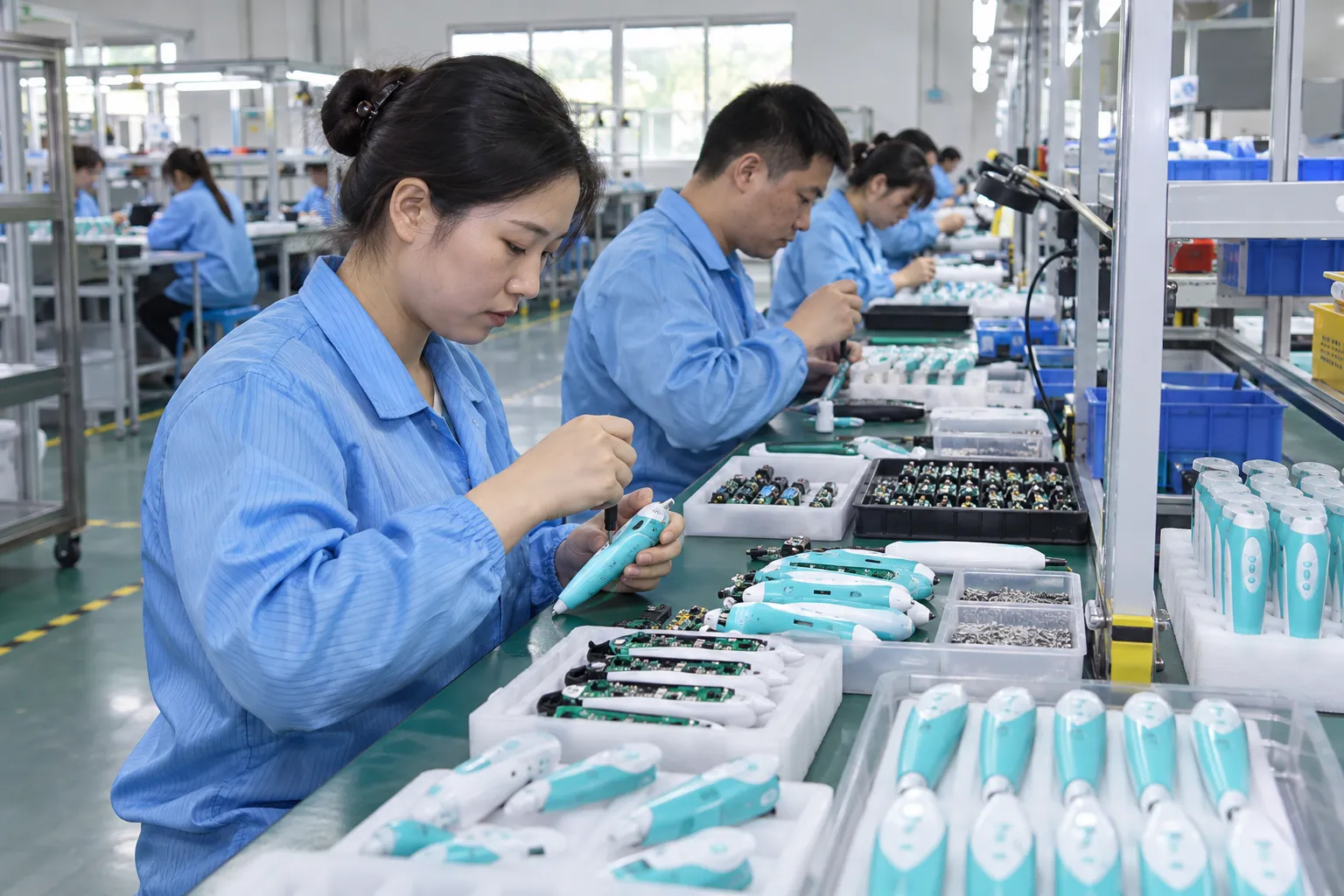
6. What should factory testing and shipment inspection cover?
Cost reduction is not complete until the changed option passes the same relevant user, workmanship, content, power, packaging, and shipment criteria.
| Control point | Practical check | Evidence |
|---|---|---|
| Alternative validation | Compare the proposed lower-cost component or process with the approved reference under representative use and inspection conditions. | Record result, defect category, and sample identity |
| SKU and pack audit | Verify every language, color, content set, accessory bundle, barcode, retail pack, carton quantity, and order allocation against the quote. | Record result, defect category, and sample identity |
| Production-control review | Confirm that quoted fixtures, programming, line tests, inspection records, defect criteria, and traceability match the risk plan. | Record result, defect category, and sample identity |
| Landed-impact review | Recalculate carton utilization, weight, shipment mode, battery handling, duties or fees to be confirmed by advisers, storage, and damage exposure. | Record result, defect category, and sample identity |
| Trigger response | Activate every touch, squeeze, pull, or button point through repeated cycles and different holding positions. | Record result, defect category, and sample identity |
| Soft-goods workmanship | Check seams, embroidery, symmetry, filling distribution, loose elements, openings, and approved color references. | Record result, defect category, and sample identity |
| Module security and audio | Verify pocket closure, component retention, speaker clarity, volume behavior, and battery access. | Record result, defect category, and sample identity |
| Pack-out condition | Confirm pose, accessories, labels, instructions, protective packing, retail presentation, and carton quantity. | Record result, defect category, and sample identity |
Testing frequency should be based on risk, process capability, component history, and the consequence of a failure. Some functions may justify a 100% production check, while appearance or packaging characteristics may be evaluated through a defined sampling plan. The ISO 28590 overview explains the role of acceptance sampling by attributes, but the buyer and inspection provider still need a written defect list, sampling basis, and accept/reject rules for the actual order.
Shipment inspection should use the approved product, controlled files, packing specification, label artwork, and purchase order as references. Inspectors should test content from different parts of the library rather than replaying one demonstration item. Allow time before the shipping deadline for containment, root-cause review, corrective action, and reinspection when needed.
See Cakub’s quality-control workflow for the broader sequence from incoming materials through shipment release, or review the factory capability page when evaluating production support.
7. How should safety and compliance planning be handled?
Compliance depends on intended use, age grading, materials, electronics, power source, wireless functions, sound output, accessories, packaging, claims, and destination market. Start planning before the final design because required tests, warnings, traceability marks, battery construction, or technical documentation can affect the product itself.
- U.S. CPSC toy safety guidance — use the current official text as a starting point for the final model and market.
- European Commission toy-safety information — use the current official text as a starting point for the final model and market.
- IEC 62115 electric-toy standard overview — use the current official text as a starting point for the final model and market.
Relevant official starting points for this topic include U.S. CPSC toy safety guidance, European Commission toy-safety information, IEC 62115 electric-toy standard overview. These links do not determine the complete test plan. Ask an accredited laboratory or qualified compliance adviser to review the final configuration and the markets where the product will be placed. Keep reports, declarations, bills of materials, label approvals, and production identities connected to the exact model and revision.
8. How can buyers compare supplier quotations fairly?
Reject comparisons that omit scope. Ask suppliers to explain differences line by line and to identify which assumptions could change after sample or file review.
Normalize quotations into the same structure: product configuration, included content volume, electronic functions, materials, accessories, retail packaging, master-carton basis, development charges, sample rounds, tooling, testing, documentation, quantity, currency, Incoterm, payment assumptions, and validity period. Highlight every exclusion. Two unit prices are not comparable when one includes programmed content, printed media, accessories, or inspection support and the other does not.
9. Common mistakes that create avoidable delay or rework
Comparing headline unit prices
The offers may use different components, content, accessories, packaging, test coverage, quantity, Incoterm, or one-time charges. The practical correction is to add an owner, reference file, approval point, and inspection method before the order enters mass production.
Treating MOQ as one factory rule
The real constraint may be a battery, PCB, fabric, print process, box, language, or setup quantity that can be redesigned. The practical correction is to add an owner, reference file, approval point, and inspection method before the order enters mass production.
Reducing cost without sample proof
A substitution can change recognition, audio, durability, appearance, packing, compliance evidence, and customer experience. The practical correction is to add an owner, reference file, approval point, and inspection method before the order enters mass production.
Ignoring SKU fragmentation
Many small language, color, or pack variants can increase setup, materials, inventory, inspection, and obsolete-stock risk. The practical correction is to add an owner, reference file, approval point, and inspection method before the order enters mass production.
10. Frequently asked questions
What is a typical talking plush toy MOQ?
There is no responsible universal number. MOQ changes with platform, customization, material and component minimums, print and packaging runs, SKU split, and supplier policy.
What determines talking plush toy price?
Major drivers can include character size, pattern complexity, fabric, embroidery, filling, module, triggers, speaker, battery, closures, and workmanship, content and programming, materials, assembly, accessories, packaging, tests, documents, quantity, and delivery basis.
Can MOQ be reduced?
Sometimes—through an existing platform, standard materials or colors, shared components, fewer SKUs, simpler packaging, digital print, or staged content. Validate the tradeoffs.
Why do samples cost more per unit?
Samples can include engineering, setup, low-volume components, manual work, programming, printing, freight, and revision effort not distributed over mass production.
What should a complete quotation include?
Configuration, quantities and SKU split, unit price breaks, one-time fees, sample plan, tooling, content services, packaging, testing, documents, lead-time assumptions, Incoterm, payment, exclusions, and validity.
Conclusion: approve a repeatable product system
Use transparent scope and MOQ causes to guide product decisions. The best commercial outcome is a configuration that meets the approved user and risk requirements and can be produced, packed, inspected, and replenished predictably.
A successful talking-plush project is not defined by a single attractive sample. It is defined by whether the approved user experience can be reproduced with controlled files, stable materials, clear workmanship criteria, suitable factory testing, traceable packaging, and a shipment-inspection method that reflects customer requirements. That is the standard buyers should use when comparing suppliers and deciding whether a project is ready for production.
Planning a custom talking-plush project?
Send your target user, product format, content scope, market, quantity range, packaging, and launch timing for a structured project review.